

B’S TOWING • GREATER NEW ORLEANS
Winch-out and recovery planning
Prefer a callback? Leave your number.
Dispatch confirms availability, equipment, timing and price. A request is not a confirmed booking.
Recovery is different from moving a freely rolling vehicle onto a truck.
Start with the important details
Recovery is different from moving a freely rolling vehicle onto a truck. The vehicle may be stuck, unstable, off the roadway or damaged in a way that makes movement unpredictable. An operator must assess the ground, access, attachment points and surrounding hazards before choosing equipment. Explain how the vehicle became stuck and what is visible from a safe position. Do not attempt a recovery using improvised ropes, attachment points or a bystander’s vehicle. Water, traffic, unstable terrain and power infrastructure can introduce hazards that require emergency or specialist assistance.
Find your situation
- Vehicle stuck in mud
- Vehicle stuck in sand
- Vehicle in a roadside ditch
- Vehicle off a driveway edge
- Vehicle stuck on a curb
- Vehicle stuck on a concrete stop
- Vehicle recovery after a collision
- Vehicle recovery from soft grass
- Vehicle with collapsed suspension
- Vehicle with an axle problem
- Vehicle stuck near standing water
- Recovery near overhead wires
- Vehicle recovery on private property
- Recovery followed by transport
Vehicle stuck in mud
For a vehicle bogged in mud, describe ground depth, wheel position and access route. Spinning wheels may worsen the position.
Vehicle stuck in sand
For a vehicle stuck on sandy ground, describe surface, slope and distance from firm access. Soft surface conditions affect truck positioning.
Vehicle in a roadside ditch
For a vehicle off the roadway, describe orientation, visible damage and roadway hazards. Keep people away from an unstable vehicle.
Vehicle off a driveway edge
For a vehicle beyond a driveway boundary, describe ground condition and remaining support. Do not climb beneath the vehicle to inspect it.
Vehicle stuck on a curb
For a vehicle hung on a curb, describe which wheels or underside areas are affected. Continued driving may increase damage.
Vehicle stuck on a concrete stop
For a vehicle over a parking stop, describe clearance and which components appear caught. Do not force the vehicle off the obstacle.
Vehicle recovery after a collision
For a damaged vehicle after a crash, describe injuries, traffic hazards and vehicle condition. Emergency needs take priority over transport.
Vehicle recovery from soft grass
For a vehicle on soft landscaped ground, describe soil condition and an authorized access route. Property access and ground damage should be reviewed.
Vehicle with collapsed suspension
For a vehicle with a suspension failure, describe affected corner and available wheel movement. The vehicle may not support normal loading.
Vehicle with an axle problem
For a vehicle with suspected axle damage, describe visible condition and whether the wheels roll. Avoid trying to drive a visibly damaged axle.
Vehicle stuck near standing water
For a vehicle near water, describe water level, location and safe access. Do not enter floodwater to connect recovery equipment.
Recovery near overhead wires
For a recovery near electrical infrastructure, describe wire location and any contact with the vehicle. Keep clear and contact emergency services for electrical danger.
Vehicle recovery on private property
For a recovery on private land, describe owner authorization and property access. Confirm authority to move the vehicle.
Recovery followed by transport
For a stuck vehicle that also needs towing, describe recovery conditions and final destination. The recovery and delivery requirements should be planned together.
Confirm the service and handoff
Before a vehicle or load moves, discuss the equipment, actual pickup access, destination and receiving contact. Ask what the quote covers and which details remain unresolved. A form or text is a request; wait for dispatch to confirm the arrangement.
Read about the related service, review pricing factors, or send your request. For time-sensitive coordination, call dispatch. Contact emergency services first if there is immediate danger or injury.
Your topic-specific dispatch checklist
Use the points that fit the actual situation. Tell dispatch which details are confirmed, and identify any that you cannot safely check. These notes help describe the job; they do not replace manufacturer guidance, emergency services or the operator’s assessment.
- Ground depth: give dispatch the current information; say when a detail is unknown.
- Surface: give dispatch the current information; say when a detail is unknown.
- Orientation: give dispatch the current information; say when a detail is unknown.
- Ground condition and remaining support: give dispatch the current information; say when a detail is unknown.
- Which wheels or underside areas are affected: give dispatch the current information; say when a detail is unknown.
- Clearance and which components appear caught: give dispatch the current information; say when a detail is unknown.
- Injuries: give dispatch the current information; say when a detail is unknown.
- Soil condition and an authorized access route: give dispatch the current information; say when a detail is unknown.
- Affected corner and available wheel movement: give dispatch the current information; say when a detail is unknown.
- Visible condition and whether the wheels roll: give dispatch the current information; say when a detail is unknown.
- Water level: give dispatch the current information; say when a detail is unknown.
- Wire location and any contact with the vehicle: give dispatch the current information; say when a detail is unknown.
- Owner authorization and property access: give dispatch the current information; say when a detail is unknown.
- Recovery conditions and final destination: give dispatch the current information; say when a detail is unknown.
Make the receiving arrangement clear
Before loading, confirm who can receive the vehicle or equipment and how the receiving site will be accessed. Share the destination address, contact name, phone number and any gate or after-hours instructions. A repair shop may need to approve the arrival, while a commercial yard may require a specific entrance or unloading space. Tell dispatch if nobody will be present so an authorized handoff can be discussed. Do not assume that a closed business, locked lot or empty job site can accept a delivery simply because an address was supplied.
Keep the recovery assessment separate from your description
Describe the scene from a safe position using observable facts. Explain where the vehicle sits, what prevents an ordinary pickup and how the property can be reached. State whether the location is controlled by a property owner, site manager or another authorized party. Do not enter an unsafe area or investigate attachment points to provide more detail.
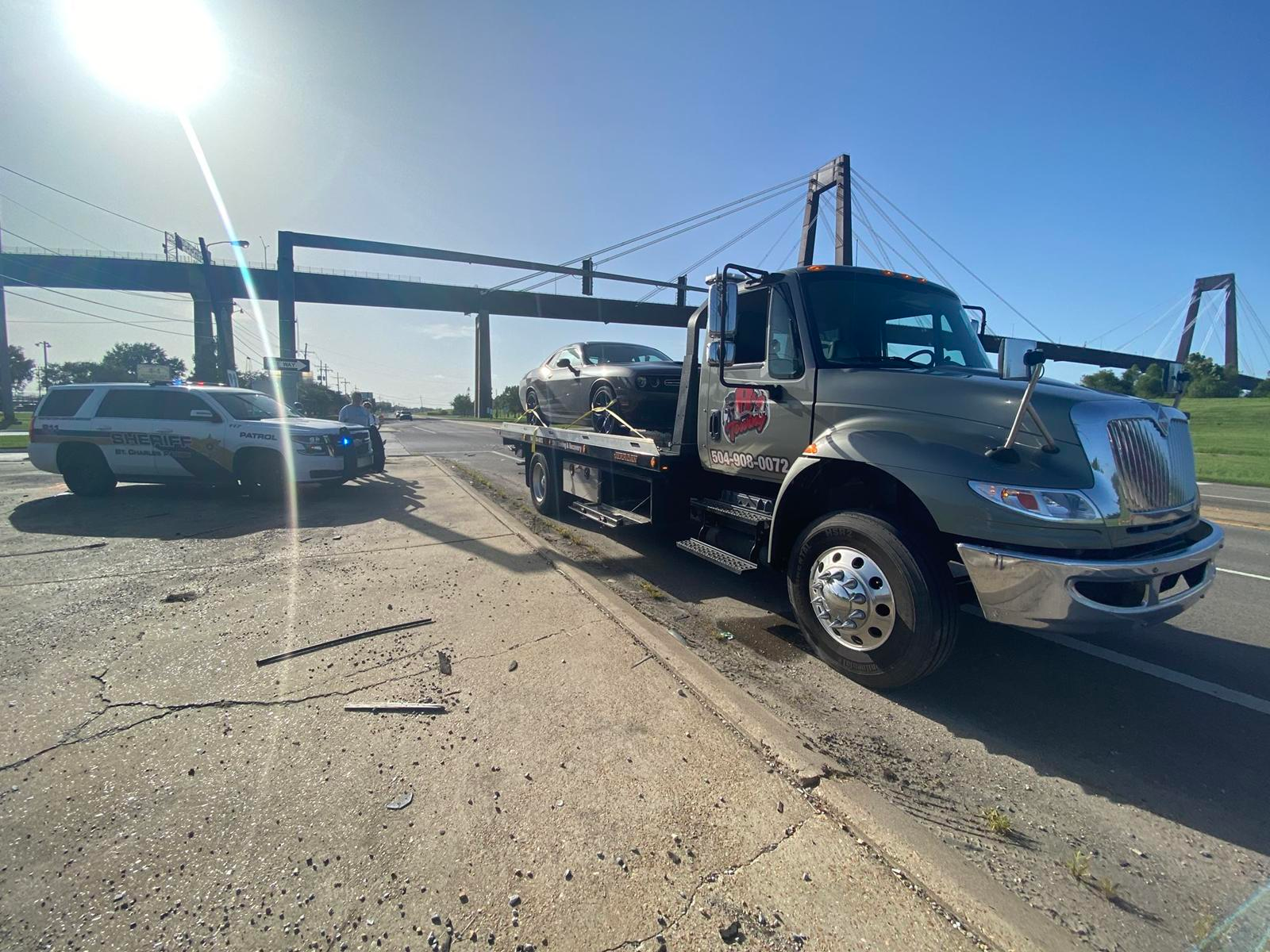
A photograph can support a written description, but explain what it shows. Identify the vehicle, nearby access and the direction of the image when useful. Tell dispatch whether it reflects the current position or an earlier moment. Avoid presenting a photograph as proof that a certain recovery method will work; the operator must assess the actual handling conditions.
Identify the limits of your information. You may know that the vehicle is off the road without knowing whether its wheels or underside are damaged. State what has been observed and what has not been checked. Do not test movement or operate damaged controls just to answer a planning question. An honest unknown helps the assessment more than an unsupported assurance.
Plan the next step after recovery. Ask whether the request concerns moving the vehicle to an accessible position, towing it to an authorized destination or reviewing both services. Confirm the receiving business if transport is proposed. A recovery request does not itself establish that the vehicle can be driven or accepted by a particular shop.
Keep the person authorized to approve service reachable while the assessment is made. If access, vehicle position or the destination changes, update dispatch with the specific change. Ask how a revised scope will be explained before you approve it. The customer supplies the facts and permissions; the operator assesses equipment and handling for the actual scene.
More pickup planning
For a vehicle on grass or loose gravel, describe the present wheel position, surrounding ground and paved approach. Overview photographs and honest uncertainty support review without assuming a recovery method.
Vehicle on grass or loose gravel: describe the ground before requesting recovery