

B’S TOWING • GREATER NEW ORLEANS
Campus vehicle pickup: identify the lot, access contact and actual car location
Prefer a callback? Leave your number.
Dispatch confirms availability, equipment, timing and price. A request is not a confirmed booking.
A campus address can cover several buildings, parking lots and controlled entrances. For a disabled vehicle, the useful location is the car’s actual position and the approach that serves it. Call B’s Towing at 504-908-0072 with the vehicle, lot and receiving details. This guide concerns an owner-arranged service inquiry; it does not authorize removal of someone else’s vehicle or establish any school’s current parking rules. Campus access and vehicle service need separate confirmation.
On this page
- Name the actual lot instead of only the campus
- Ask the property contact about the permitted approach
- Separate the vehicle contact from the student’s schedule
- Describe the car without trying to prove its condition
- Choose a receiver beyond the campus pickup point
- Reconfirm after events, closures or contact changes
- Questions and answers
Pickup planning
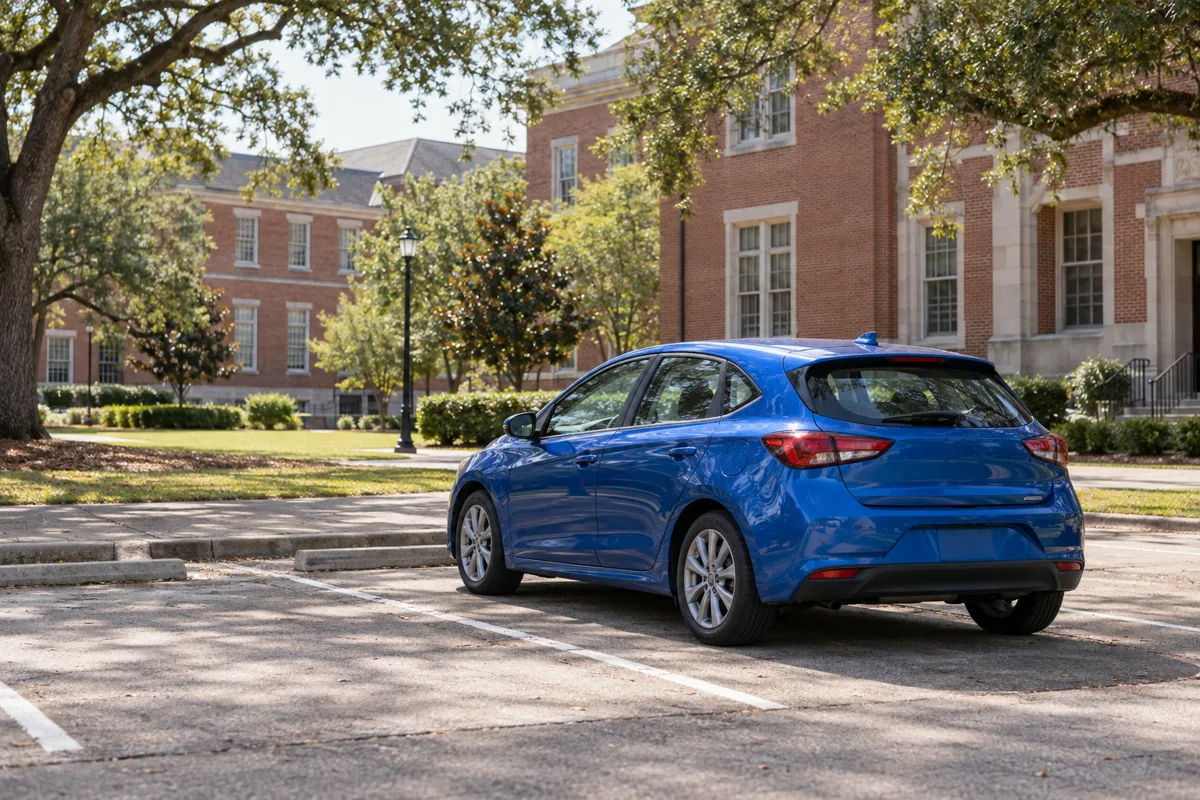
Name the actual lot instead of only the campus
Begin with the campus name and the specific parking facility, then give the vehicle’s row, level or nearest fixed identifier when known. Distinguish a surface lot from a garage or gated area. A residence hall address may identify where the driver lives rather than the vehicle’s position. Explain that difference so dispatch does not mistake a meeting point for the car’s pickup location. Check a shared pin against the description before sending it.
Use identifiers that remain useful after classes or an event ends. A nearby parked bus or another student’s car may move before collection. If the campus uses lot names, explain the name in your request and identify the entrance that serves that lot. Do not assume dispatch can infer a vehicle location from a building nickname. Where the exact position is uncertain, contact the person with the vehicle or the relevant property contact instead of sending a confident but unverified location.
Ask the property contact about the permitted approach
Contact the relevant campus parking, security or property representative for current access instructions when needed. Ask which entrance can be used for the proposed vehicle collection and whether someone must meet the operator. Keep those property instructions distinct from dispatch’s review of suitable equipment and actual access. Permission to enter does not by itself establish that a truck can reach the car through the available route.
Describe any confirmed gates, overhead restrictions, narrow lanes, bollards or pedestrian areas along the approach. Do not move barriers, follow another vehicle through a gate or direct a truck onto a pedestrian route to simplify the request. If staff arrange an escort, identify the reachable escort contact and meeting location. Explain whether a gate closes at a particular time, but confirm its current availability directly rather than relying on a general campus schedule or a student’s usual access privilege.
Separate the vehicle contact from the student’s schedule
Identify who can approve the vehicle arrangement, who has the key and who will answer dispatch at collection. A parent or family member may coordinate by phone while a student meets the truck. Tell dispatch how those roles fit together. If the car belongs to someone else, resolve authorization with the responsible party instead of assuming campus enrollment settles it. Keep one current set of instructions rather than several relatives sending competing destinations.
Share schedule constraints as requests for discussion, not as promised pickup times. Classes, exams, work and campus events may limit the driver’s availability without changing dispatch’s actual service timing. If the student must leave, agree on a reviewed key and contact arrangement before doing so. Do not leave the request dependent on a phone that will be switched off during class. Keep sensitive student records, access credentials and unrelated personal information out of the general towing inquiry.
Describe the car without trying to prove its condition
Give the make, model and known present condition. Say whether there is a working key and what is known about starting, rolling, steering and braking. Explain a low tire, damage or other observed issue without treating a guess as a confirmed diagnosis. Do not restart or move a vehicle just to produce a more certain description for the message. If someone has inspected it, distinguish their confirmed findings from the driver’s observations.
Describe surrounding access as well as the car itself. A tightly parked vehicle can require a different review from the same model in an open lane. Safe photographs may show the car, nearby obstacles and approach without including people or personal documents. If another vehicle blocks the way, coordinate access with the appropriate person rather than moving property you do not control. The operator reviews the actual situation; neither a campus permit nor a photograph approves a loading method.
Choose a receiver beyond the campus pickup point
Confirm the destination that is proposed for the car, including the complete address, entrance and receiving person. A student’s family home may be far from the campus, while a nearby shop may have a different intake window. Discuss the actual route and scope with dispatch rather than assuming an ordinary local inquiry covers every destination. Ask the receiver to accept the car in the condition described, including any known inability to move normally on arrival.
Keep passenger travel separate. The student and friends may need their own onward ride even when the vehicle service is available. Ask directly about any offered accommodation and do not assume seats are included. Coordinate essential belongings from a safe position and agree who handles items traveling elsewhere. If the destination or receiver changes after the first call, update the same request clearly and state which earlier instruction should be replaced before relying on a different delivery plan.
Reconfirm after events, closures or contact changes
Campus access can change between the first inquiry and actual collection. A lot may become busy after an event, the driver may move to a different waiting point or the original property contact may finish a shift. Report known changes through the existing request. Keep the car’s pickup pin distinct from the person’s new location. If staff move the vehicle, obtain its current position before sending the operator toward the old one.
Before approving service, read back the lot, entrance, vehicle condition, key arrangement, receiver, requested timing and quoted scope. Ask what is confirmed and what still depends on review. A school contact approving access does not book B’s Towing, and a form submission does not guarantee a collection deadline. Retain the actual handoff details and keep the coordinating contact reachable through delivery. Follow up separately on campus parking records or repair intake; those outcomes are not established simply by arranging the vehicle move.