

B’S TOWING • GREATER NEW ORLEANS
Forklift transport inquiries: describe the machine, configuration and site handoff
Prefer a callback? Leave your number.
Dispatch confirms availability, equipment, timing and price. A request is not a confirmed booking.
A forklift transport inquiry needs more than a brand name and a pickup address. Dispatch needs to understand the actual machine, its present condition, the property approach and the receiving arrangement. Call B’s Towing at 504-908-0072 with those details to ask about available service. This guide does not establish capacity, select a trailer or provide loading instructions. It helps the equipment owner and site contacts prepare one accurate request for review.
On this page
- Identify the machine using its applicable records
- Describe the mast, accessories and current condition
- Explain where the forklift sits within the property
- Assign responsibilities for preparation and loose items
- Confirm the receiver and access for the actual equipment
- Confirm what is accepted and keep the request current
- Questions and answers
Pickup planning
Identify the machine using its applicable records
Provide the manufacturer, model and other useful identification information from the records that apply to the actual forklift. Explain whether it is company-owned, rented or being transferred between businesses, and name the person responsible for approving the proposed movement. A common equipment nickname can leave uncertainty about which machine is waiting on a property with several similar units. Use an agreed identifier to keep the inquiry tied to the correct forklift.
Give known dimensions and weight information with their source, and describe the configuration that is present. Do not use a stated lifting rating as if it were the machine’s transport weight or assume a figure for another model applies. If the information is missing, say so and ask what documentation is needed for review. Keep applicable manufacturer and equipment records available rather than guessing a specification because the machine looks similar to one that was transported on an earlier job.
Describe the mast, accessories and current condition
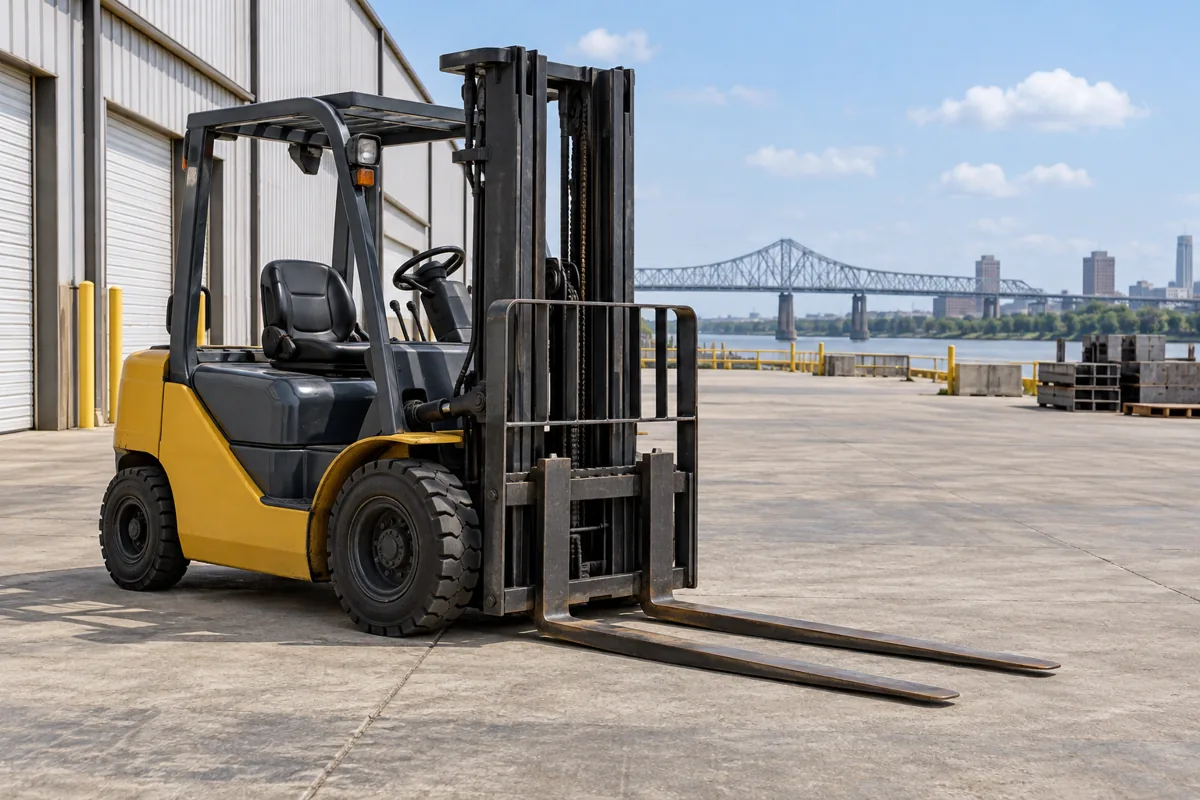
Explain the machine as it stands, including its mast configuration, fitted accessories and any attachments that are still with it. State whether forks or other items are installed or separate. A model description may not establish the actual equipment that will be present at collection. Tell dispatch about damage, missing components or other known differences from the records, identifying what has been confirmed and what remains uncertain.
Describe what is known about operating condition without running the machine simply to prove an answer. Say whether a qualified site contact has confirmed a problem affecting movement or controls. Do not improvise a mechanical release, adjustment or lifting procedure to prepare for a possible transport. The request should let dispatch and the operator review the actual machine using appropriate information. If a site representative changes the configuration after the inquiry, update the existing request before anyone relies on the earlier description.
Explain where the forklift sits within the property
Give the actual machine position and the entrance that leads to it. A warehouse reception address may differ from the yard gate or loading area. Describe whether the forklift is indoors, under a covered area or on an exterior apron, and name a reachable site contact who can explain the approach. Tell dispatch about confirmed overhead restrictions, gates, tight turns, surfaces and surrounding activity without selecting an equipment route yourself.
Coordinate access through the property’s responsible representative. Do not assume a forklift’s normal route through a building is an available approach for a proposed transport vehicle. Ask about the practical collection point and any site-controlled check-in or escort. If the machine will be repositioned by authorized staff, make clear whether that is only proposed or has actually happened. Safe overview photographs can supplement the description but do not replace property permission, actual access information or the operator’s suitability review.
Assign responsibilities for preparation and loose items
Identify who is responsible for the machine’s readiness and who can answer equipment questions on the collection day. Keep any preparation process with the appropriate equipment owner, site staff and applicable manufacturer information. This page does not instruct a driver to operate, dismantle or prepare a forklift. Ask dispatch what information is needed before a service arrangement can be accepted, and avoid treating an unreviewed preparation idea as a transport requirement.
Discuss loose accessories, documentation and other property separately. Say which items are requested to travel with the machine and who handles anything going elsewhere. A forklift move does not silently include unloading a storage area, moving stock or transporting a separate set of attachments to another address. Keep private site credentials, customer information and unnecessary inventory records out of the general inquiry. A clear allocation of responsibilities prevents the receiving business from expecting items that were never included in the accepted request.
Confirm the receiver and access for the actual equipment
Ask the destination to confirm acceptance of the specific forklift and its condition. Give the complete receiving address, usable entrance, responsible contact and available window. A repair appointment or rental return reference may leave the physical equipment handoff unresolved. Explain whether a receiver expects a functioning machine or needs to review a nonoperating unit, without promising that the forklift can be driven or handled in a particular way on arrival.
Coordinate the receiving arrangements with the pickup site and dispatch’s reviewed service. If another business controls unloading or entry, identify that contact and establish who resolves questions. Do not assume temporary storage, unattended delivery or extra site work is included. Keep the route for the machine distinct from travel for an operator or employee who needs to reach the destination. If the receiver changes its acceptance, update the same request and obtain a reviewed alternative rather than leaving several possible receiving addresses active.
Confirm what is accepted and keep the request current
Read back the machine identification, configuration, known condition, access, site contacts and receiver with dispatch. Ask which equipment and service scope can be offered after review, along with timing and price. A quotation inquiry does not establish that a particular machine fits available capacity or that a specific trailer is reserved. Leave suitability and handling decisions with the actual service review instead of turning a photograph or model name into a guarantee.
Report meaningful changes through the existing request: a different forklift substituted, an attachment added, a site gate unavailable or a receiver declining intake. State which earlier information is replaced. Keep the authorizing and site contacts reachable through collection and delivery. Retain the actual equipment identification and handoff details for company records. Transport completion establishes the movement that occurred; it does not by itself certify machine condition, settle a rental return or confirm that repair work has been accepted or completed.