

B’S TOWING • GREATER NEW ORLEANS
Work van breakdown: coordinate tools, equipment and vehicle receiving
Prefer a callback? Leave your number.
Dispatch confirms availability, equipment, timing and price. A request is not a confirmed booking.
A work van breakdown can interrupt a job while leaving tools, materials and company property inside the disabled vehicle. Tell dispatch about the van's actual configuration and anything that affects the pickup. Keep decisions about the equipment and work schedule with the responsible business contact. Call B’s Towing at 504-908-0072 to discuss available vehicle service. This guide helps organize the vehicle and property handoff without assuming unloading, storage or continued jobsite delivery is included.
On this page
- Describe the van as it is currently equipped
- Identify control and access limitations
- Decide what stays and what must be transferred separately
- Coordinate the employer and driver through one current request
- Confirm the receiver accepts the loaded vehicle
- Confirm the offered scope before adjusting the work schedule
- Questions and answers
Pickup planning
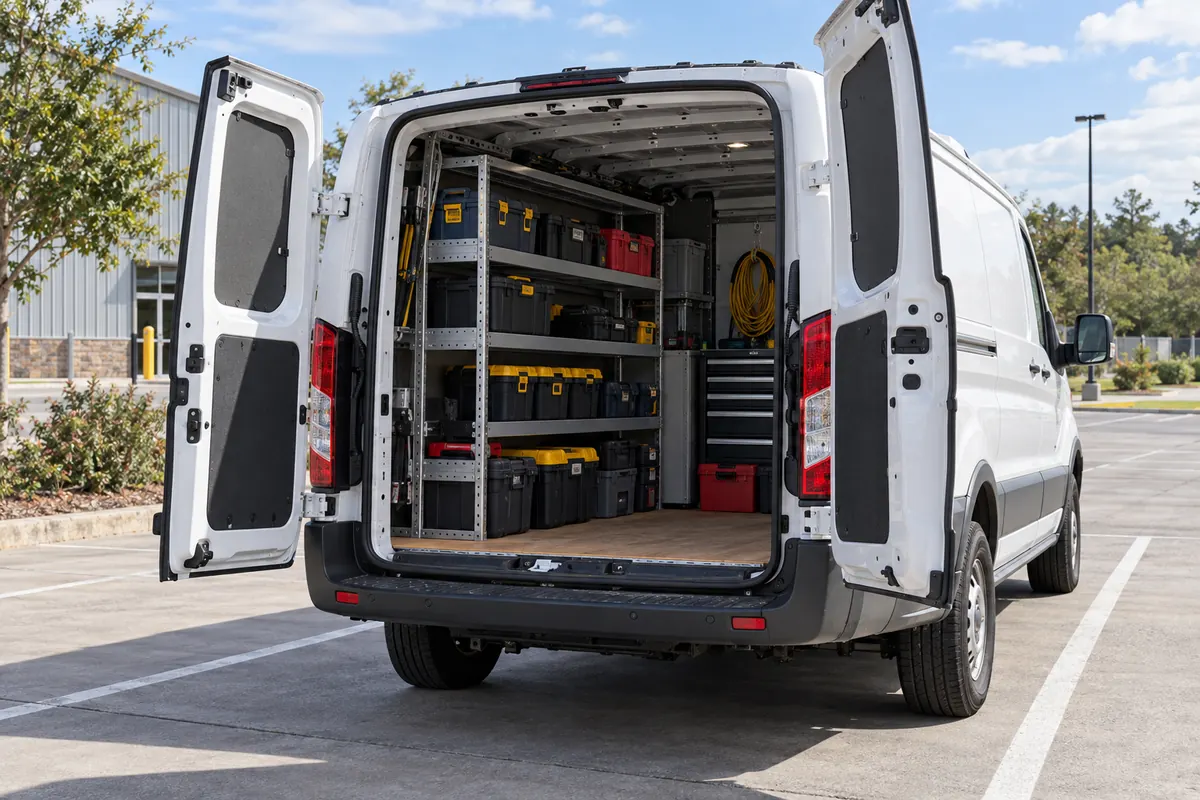
Describe the van as it is currently equipped
Give the make, model and relevant body configuration, then identify fitted shelving, roof equipment, racks or other features that change the present vehicle. A description such as small work van may not capture its height, accessories or current condition. Use company records when available and explain when a detail is only an estimate. Do not invent a loaded weight or treat an empty-vehicle specification as the current load.
Describe whether the van is carrying tools, parts or materials and which items affect access or the requested scope. You do not need to send a public inventory of valuable equipment. A useful request distinguishes installed equipment from loose property and identifies the business contact who can answer further questions. If equipment has changed since an earlier transport, report the current configuration rather than relying on a previous successful pickup as approval.
Identify control and access limitations
Explain the breakdown as observed, including any known limitations on starting, rolling, steering or braking. Say who has the keys and whether the driver can remain available. If the van is on a customer's property, behind a gate or inside a restricted work area, provide the actual entrance and authorized access contact. A jobsite address may point to an office rather than the disabled vehicle. Label those locations clearly.
Tell dispatch whether fitted equipment or stored materials affect access to doors or other parts of the vehicle. Do not rearrange a heavy load, operate installed equipment or move the van simply to demonstrate readiness. Let the reviewing parties identify what information is missing. A driver can report what is visible while a fleet manager supplies records; the request should make that division clear so an unanswered question is not silently treated as confirmed.
Decide what stays and what must be transferred separately
The business should identify any tools, job materials or personal essentials needed before the van reaches a receiver. Assign an authorized person to that decision and discuss whether a separate vehicle or collection arrangement is needed. A tow inquiry does not automatically include unloading shelves, delivering materials to the next job or storing equipment independently. Ask about any additional requested work rather than adding it to the pickup by implication.
Keep a private business record of what is removed and who takes responsibility for it. Do not send photographs that expose customer paperwork, access credentials or detailed equipment inventories unnecessarily. Retrieval must fit the actual location and accepted access arrangements. If items cannot be reached safely or a receiving business cannot accept them, report that constraint before treating the van's destination as settled. Avoid letting a work deadline create conflicting property instructions.
Coordinate the employer and driver through one current request
Identify the person who can approve the vehicle arrangement, supply company information and resolve destination questions. The driver, dispatcher, supervisor and business owner may each know different facts. Use one current request so instructions from several people do not become competing pickups or contradictory routes. Explain whether the company contact is only supplying information or actually responsible for authorizing the proposed scope.
Keep personal employee details and customer information out of the general request unless they are necessary for the accepted arrangement. If the driver leaves to continue work, update the reachable contact and key handoff. A replacement driver or colleague arriving with another vehicle does not automatically replace the original vehicle destination. State what changed, who is now responsible and which earlier instruction should no longer be used.
Confirm the receiver accepts the loaded vehicle
Ask the intended repair business or company yard whether it accepts the van in the condition described, including the property that will remain inside. Give the exact receiving entrance and a contact who can handle arrival. An ordinary repair appointment may not resolve access for a van that cannot move normally or has fitted equipment affecting its configuration. Keep the vehicle receiving point distinct from the jobsite that still needs materials.
Coordinate keys, paperwork and any separate equipment collection through the business's actual process. Do not assume an unattended drop, after-hours access or independent property storage is accepted. If the original receiver cannot take the van, pause the destination assumption and seek a revised arrangement through dispatch. Record what the new receiver has confirmed, rather than forwarding a company address without checking who will accept the vehicle.
Confirm the offered scope before adjusting the work schedule
Ask dispatch about availability, reviewed equipment needs, pickup conditions, timing and price. Identify whether any part of the proposed request remains pending company approval or receiving confirmation. A desired job completion time does not establish a towing appointment or arrival guarantee. Plan staffing and replacement transport around the actual confirmed arrangement rather than a preliminary form submission or a colleague's estimate.
Report meaningful changes through the same contact: removed equipment, new key holder, altered vehicle condition, changed gate access or a different receiver. Keep someone reachable through delivery and retain the actual handoff details. Vehicle movement does not confirm the repair timeline or that the van's tools are ready for the next job. The business should close out property custody and work scheduling separately once it knows what actually occurred.