

B’S TOWING • GREATER NEW ORLEANS
Vehicle pickup from a narrow driveway: describe the entire approach
Prefer a callback? Leave your number.
Dispatch confirms availability, equipment, timing and price. A request is not a confirmed booking.
A narrow driveway request should describe the entire route to the car, including the entrance and the space around its present position. Call B’s Towing at 504-908-0072 to discuss the actual location, vehicle and availability. A clear description helps dispatch review the request before equipment or timing is confirmed. This guide does not certify that a truck fits, approve a loading angle or tell an owner to move a disabled vehicle to create an assumed working position.
On this page
Pickup planning
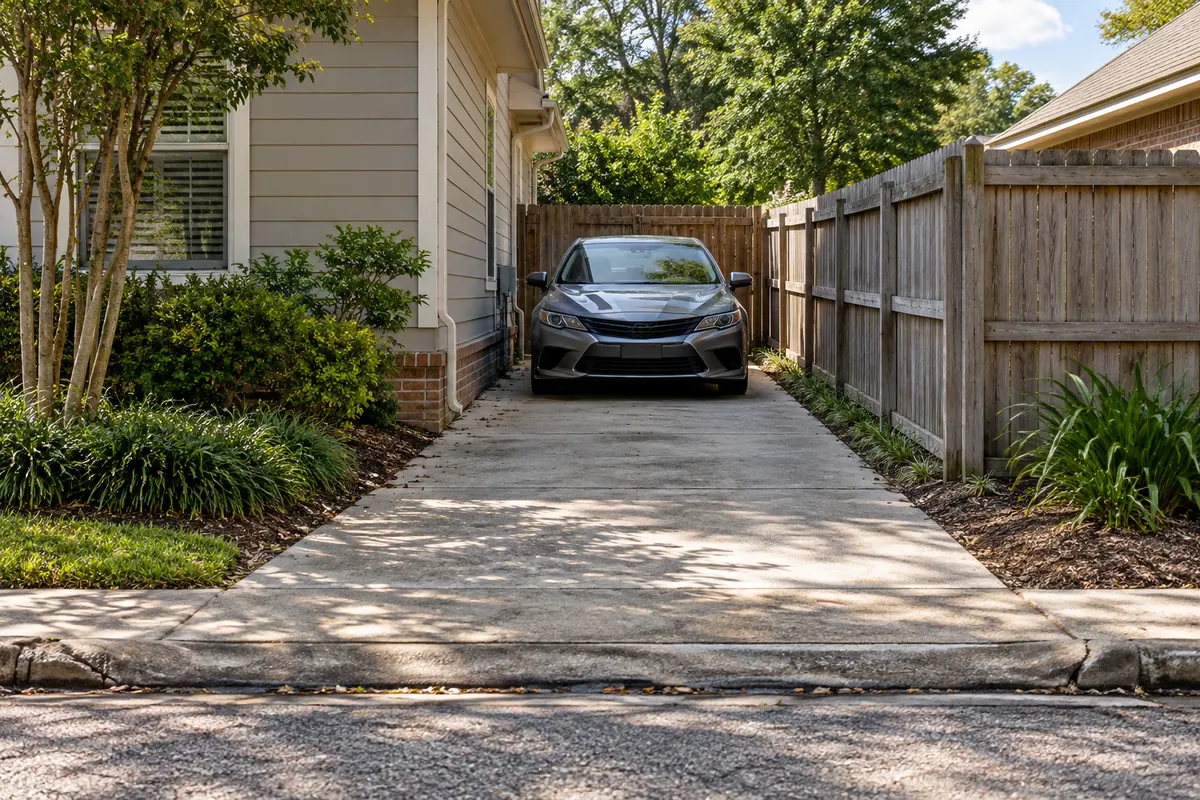
Locate the vehicle within the property
Give the street address and identify which driveway reaches the vehicle. A corner property, shared entrance or rear parking area may have a different usable approach from the front door. Explain the car’s current position using fixed landmarks, such as beside a fence or near a garage opening. State whether it is nose-in or facing the entrance. A map pin at the building helps identify the property while still leaving the actual vehicle position and access route unclear.
Distinguish the place where a person will meet the operator from where the disabled car sits. If you are coordinating remotely, identify the on-site person who can answer current questions. Explain whether the car has moved since the initial description or photographs. A driveway can remain at the same address while its usable space changes because another vehicle arrives or stored items are added. Use the current arrangement rather than assuming an older image still explains the approach accurately.
Describe restrictions along the complete approach
Report known narrow points, turns, walls, fences, trees, covers and other restrictions between the street and the car. If reliable dimensions already exist, identify what was measured and where. A single gate width does not describe every part of a long driveway. Do not infer equipment fit because a passenger car or unrelated service vehicle previously entered. Dispatch needs the actual route information, and the operator still needs to assess the setting rather than rely on a general assurance that a truck should fit.
Do not climb, step into traffic or enter an unsafe position to produce measurements for the inquiry. State what remains unknown and identify a property contact who may have relevant information. Safe overview photographs can show the entrance and the route toward the car. Label the direction shown and separate a wide view from a close-up of an obstruction. Photographs support the review; they do not establish clearance, an approved handling method or permission to use a neighboring driveway.
Explain surface, slope and the space around the car
Describe the surface as it actually appears: concrete, asphalt, gravel, grass or another known condition. Mention visible soft areas, standing water, a slope or a change in level without attempting to certify its strength or stability. Tell dispatch whether the vehicle is close to a wall, garage, parked car or other fixed obstruction. If the present arrangement leaves one side inaccessible, explain that fact. Do not describe future clearance work as complete simply because someone expects to move an item before collection.
Avoid pushing the car toward the street, changing supports or moving other people’s property to fit an assumed loading method. Ask the responsible person about an authorized clearance arrangement where needed and report its actual status. The goal is a truthful description of the current setting, including what remains pending. A narrow approach and a restricted final parking position are separate questions; solving one does not automatically establish that the requested equipment can reach and work around the disabled vehicle.
Report vehicle condition and key availability
Provide the make, model and relevant configuration, including low bodywork, projecting accessories or another feature that affects the current vehicle. State known facts about starting, rolling, steering and braking separately. A car parked nose-in may also have a locked wheel or unavailable key, and those limitations should not be left out because the driveway initially seems to be the main problem. Identify whether information comes from direct current observation or a report supplied by another person.
Do not move or operate the vehicle merely to test a condition for dispatch. Say what is unknown and identify an owner or repair contact who may know. Keep vehicle-specific information available for the professional assessment. This page supplies no loading, lifting or control-release instructions. The service review needs the actual car and access together, rather than an assumption that a driveway collection is routine as long as the engine starts or a neighbor previously used the entrance with a larger vehicle.
Keep the reviewed access plan current
Ask dispatch to review availability and scope using the present driveway, vehicle and receiver information. Identify which measurements, contact decisions or access tasks remain unresolved. A preferred time or exchanged photograph does not confirm a booking or equipment fit. If the driveway is expected to be cleared by a particular time, describe that as a planned change and provide an update once it is complete. Do not replace the actual review with an owner’s promise about a handling method.
Use the existing request to report a blocked entrance, changed parking position, unavailable key holder or revised receiving instruction. State which earlier detail is replaced and ask for acknowledgment when it affects the arrangement. Keep a reachable responsible contact through collection and delivery. Retain actual handoff confirmation under the agreed process. A completed vehicle move does not certify the property, settle a shared-driveway dispute or establish that later service equipment can use the same route under different conditions.