

B’S TOWING • GREATER NEW ORLEANS
Drive-through breakdowns: coordinate the stopped vehicle and business access
Prefer a callback? Leave your number.
Dispatch confirms availability, equipment, timing and price. A request is not a confirmed booking.
A vehicle that becomes unavailable in a drive-through lane needs a clear location description and coordination with the business controlling the property. Tell B’s Towing where the car actually sits at 504-908-0072, rather than giving only the restaurant or store name. Dispatch reviews the vehicle, access and proposed destination before confirming service. This guide concerns an owner-arranged request; it does not authorize removal of someone else’s vehicle or provide instructions for moving a car through a restricted lane.
On this page
- Identify the branch and the exact stopping position
- Coordinate with the person controlling business access
- Describe the vehicle condition without diagnosing it in the lane
- Keep the driver, keys and passengers in a separate contact plan
- Choose a receiver before relying on a vehicle movement
- Confirm one arrangement and update changes promptly
- Questions and answers
Pickup planning
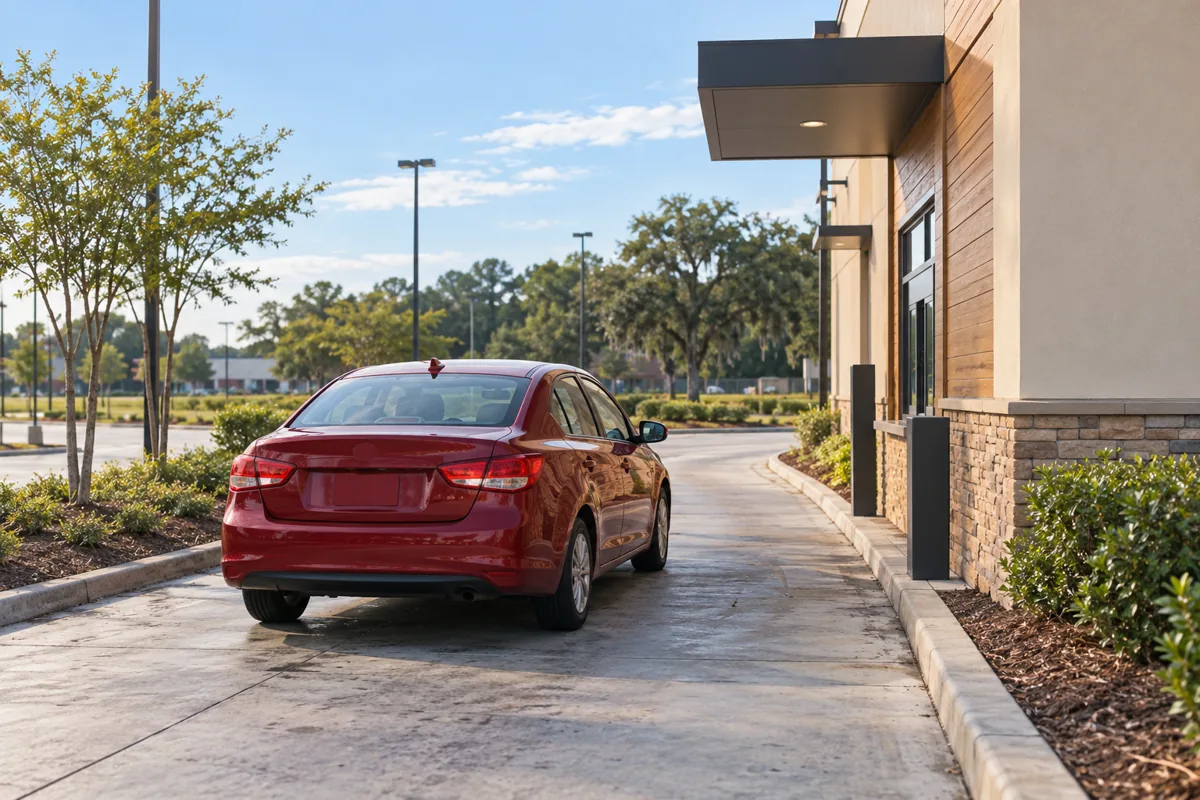
Identify the branch and the exact stopping position
Give the full business address and the specific branch when the business has several locations. Describe where the car sits within the drive-through route, using fixed features visible from a safe position. An ordering area, pickup window and lane exit may be separate positions with different approaches. State whether the vehicle remains in the lane or has already been moved to another part of the property.
Check a shared pin against that written description. A business listing can place a pin at the main entrance while the car is behind the building. Label where the driver is waiting separately if it differs from the stopped vehicle. Do not walk through active traffic or enter a restricted area solely to collect a photograph. Explain uncertainties directly so dispatch can ask for relevant information instead of relying on a confident but incomplete location.
Coordinate with the person controlling business access
Tell the appropriate manager or property representative about the vehicle situation and ask who can explain the collection approach. Keep that contact distinct from the person approving the vehicle service when they are different people. Business staff may control an entrance, a traffic arrangement or access to a rear lane, but their permission does not by itself establish that proposed transport equipment can reach the car.
Give dispatch any current property instructions and describe known turns, overhangs, lane width restrictions or surrounding activity without approving a route yourself. Do not move barriers, direct customer traffic or assume a delivery entrance is available just because it appears open. If staff propose another vehicle position, distinguish the proposal from a completed relocation. Use a reachable business contact so an approach question can be resolved using the actual property situation.
Describe the vehicle condition without diagnosing it in the lane
Give the make, model and what is known about keys, starting, rolling, steering and braking. State the observed event and identify any confirmed inspection information separately from a guess. A stopped vehicle in a busy lane does not need to be operated again merely to provide a more definite answer for the inquiry. Tell dispatch what remains uncertain and whether someone has already attempted to arrange assistance.
Report damage, a flat tire or another relevant observation without selecting a loading or recovery method. This page gives no instructions for pushing, releasing, steering or moving the car around obstacles. Keep handling decisions with the appropriate review of the actual vehicle and conditions. If the vehicle moves or its condition changes after the first conversation, update the same request so dispatch is not evaluating a location or state that no longer exists.
Keep the driver, keys and passengers in a separate contact plan
Identify who can approve service, who has the working key and who will answer dispatch during collection. A family member may coordinate remotely while the driver remains at the business. Explain those roles and keep one current set of instructions. If the driver waits inside or at another safe location, label that meeting point separately from the car’s actual position. Do not let the contact point silently become the pickup address.
Ask about passenger accommodation directly and arrange separate travel when needed. The vehicle inquiry does not establish seats for a family or transport to several personal destinations. Coordinate essential belongings through the responsible owner when they can be retrieved safely and with permission. If the key holder leaves, agree on a reviewed handoff and updated contact rather than hiding keys or leaving dispatch dependent on a phone that is no longer available.
Choose a receiver before relying on a vehicle movement
Name the proposed vehicle destination, complete address, usable entrance and reachable receiver. Ask that person or business to accept the car in its actual condition. A nearby repair shop may be a possibility without having agreed to receive the delivery. Keep the driver’s intended destination and the car’s receiver separate when they differ, and explain any unresolved receiving question to dispatch.
Discuss the route and scope using the vehicle’s present position and the confirmed business-access information. Do not assume an initial roadside inquiry includes towing, an extra stop, unattended delivery or temporary storage. If the receiver becomes unavailable, update the existing request and obtain a reviewed alternative. A message listing several possible shops does not establish an accepted delivery plan, and urgency at the pickup does not remove the need to confirm where the car can actually go.
Confirm one arrangement and update changes promptly
Before approving service, read back the business branch, actual vehicle position, access contact, condition, key handoff, receiver, timing and quoted scope with dispatch. Ask what has been accepted and what remains under review. A business asking that a lane be cleared does not itself book B’s Towing or guarantee a particular arrival time. Keep a requested deadline distinct from the service availability actually offered.
Report a relocated vehicle, changed approach, unavailable manager or revised destination through the same request. State which earlier information is replaced. If another provider accepts help while you are still coordinating, make that clear rather than leaving duplicate arrangements active. Retain actual collection and receiving details. Completion of the vehicle move does not decide a mechanical diagnosis, a business-property question or any separate passenger journey; those matters remain with the parties responsible for them.