

B’S TOWING • GREATER NEW ORLEANS
Event venue vehicle pickup: identify the lot, entrance and access contact
Prefer a callback? Leave your number.
Dispatch confirms availability, equipment, timing and price. A request is not a confirmed booking.
A vehicle parked for an event can be far from the venue’s main address or public entrance. Lot identifiers, temporary routes and the people controlling access help turn an address into a usable pickup request. Call B’s Towing at 504-908-0072 to review the actual location and availability. This guide organizes a vehicle-owner request; it does not authorize entry, removal of another person’s vehicle or movement of traffic barriers. Confirm the actual service and access arrangement before treating collection as booked.
On this page
- Identify the parking area and the vehicle within it
- Find the authorized route under current event conditions
- Describe the vehicle and the space around it
- Agree who can remain available for access and keys
- Plan people and the receiving destination separately
- Confirm the arrangement and update the same request
- Questions and answers
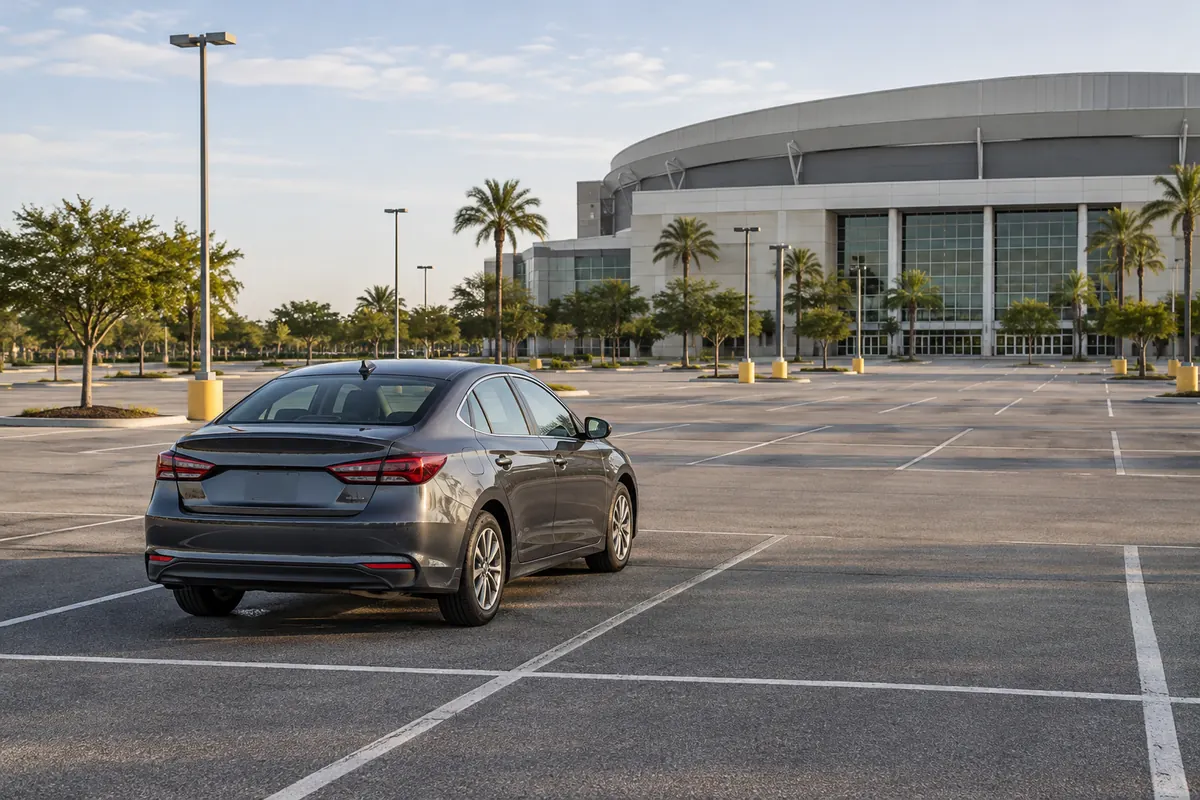
Identify the parking area and the vehicle within it
Give the venue or event name, then identify the actual lot, garage or off-site parking location. Include posted lot letters, a section, level, row or nearby fixed marker when available. The name of an event may identify a large area without locating a disabled car. Tell dispatch whether the pin marks the vehicle, an entrance or your own waiting position. Keep those points separate if you walked away from the car to find a contact or a safer waiting place.
Ask the responsible parking contact for clarification when a ticket label or event map does not match the lot signs. A temporary name used for an event may differ from the property’s usual entrance description. Provide the current identifier and explain its source rather than choosing an uncertain access point. If the vehicle is at an off-site facility, give that facility’s location instead of treating the venue’s street address as the pickup address. A concise, labeled description is more useful than several unlabeled pins.
Describe the vehicle and the space around it
Provide the make, model and relevant configuration, then describe the observed problem and present condition. Report key availability and separate known limitations on starting, rolling, steering and braking. A car that entered the lot normally may now have a flat, wheel damage or another issue affecting collection. Identify what is a direct observation and what someone else reported. Do not test-drive or push the vehicle to make an uncertain answer sound definite for the request.
Describe the parking direction and nearby vehicles, curbs, walls or other obstructions. Tell dispatch if the car is in a marked garage space, on an unpaved surface or in an area with limited approach room. If surrounding spaces are expected to clear, describe that as a possible future change rather than the current condition. Photos can supplement a safe written description, but do not establish fit or choose a loading method. Avoid entering a moving aisle or restricted area to improve an image.
Agree who can remain available for access and keys
Identify the vehicle’s responsible person and the contact who can meet the operator or complete an agreed handoff. If you are arranging help for a family member or colleague, explain who is actually at the car and who can approve service changes. Keep those roles clear instead of supplying several telephone numbers without instructions. Tell dispatch about any reason the scene contact may need to leave, and discuss the proposed arrangement before assuming an unattended pickup can be accepted.
Ask the parking or venue contact about actual access availability after the event or after staffed hours. Do not infer permission from a lot appearing quiet or an entrance remaining open. Keep private credentials and key handoff details within the agreed communication process. If a contact changes shift, identify the replacement and current instructions. The vehicle may remain at the same pin while the person able to authorize entry or provide a key becomes unavailable, so contact availability belongs in the pickup plan.
Plan people and the receiving destination separately
Arrange onward travel for people independently of the vehicle request. Explain relevant needs involving children, pets, luggage or mobility equipment through the appropriate travel arrangement, without assuming a tow includes passenger capacity. An event ending or another ride arriving does not automatically complete the vehicle’s key or release handoff. Identify who remains responsible for the car after people leave, and ask dispatch about any changed attendance plan before presenting collection as ready.
Provide the actual receiving address, entrance and contact, and confirm acceptance for the car’s current condition and intended handoff time. A repair shop’s map listing or a friend’s suggested address does not establish that the vehicle can be received there. Ask about after-hours instructions when attendance is unavailable, rather than assuming a closed location accepts delivery. If the destination is still undecided, tell dispatch which decision is pending and who will resolve it before the request is finalized.
Confirm the arrangement and update the same request
Ask dispatch what service, equipment and availability can be confirmed using the current lot location, condition, access instructions and receiver. Share timing constraints as information for review, not as an arrival promise. An ordinary open-parking-space estimate may describe a different request from a disabled vehicle in a restricted deck. Clarify the quoted scope and authorized approval contact. Submitting a form or receiving preliminary information does not by itself establish that a pickup is booked.
Update the existing request if traffic arrangements change, the car moves, access closes or the handoff contact leaves. State what replaces the earlier instruction and ask for acknowledgment where the change affects service. Avoid sending a second request with a different lot name while leaving the first active and unexplained. Keep the relevant service reference and use the agreed collection and receiving-confirmation process. A completed route on a map does not establish that keys, release and actual receiving acceptance have all been resolved.