

B’S TOWING • GREATER NEW ORLEANS
Medical-facility parking pickup: coordinate the car separately from the person’s care
Prefer a callback? Leave your number.
Dispatch confirms availability, equipment, timing and price. A request is not a confirmed booking.
A disabled car at a medical facility creates a vehicle problem alongside whatever brought its driver there. Keep the vehicle arrangement separate from care, appointments and the person’s onward travel. Call B’s Towing at 504-908-0072 with the car’s actual location, condition and a reachable coordinating contact. This guide concerns an owner-arranged pickup inquiry. It does not provide medical advice, determine facility policy or promise transport for a patient or accompanying family members.
On this page
- Locate the car rather than only the medical building
- Ask the relevant property contact about access
- Assign vehicle responsibilities without sharing unnecessary care details
- Describe the vehicle and avoid an unneeded second trip
- Plan the person’s onward travel independently
- Confirm the receiver and the accepted vehicle scope
- Questions and answers
Pickup planning
Locate the car rather than only the medical building
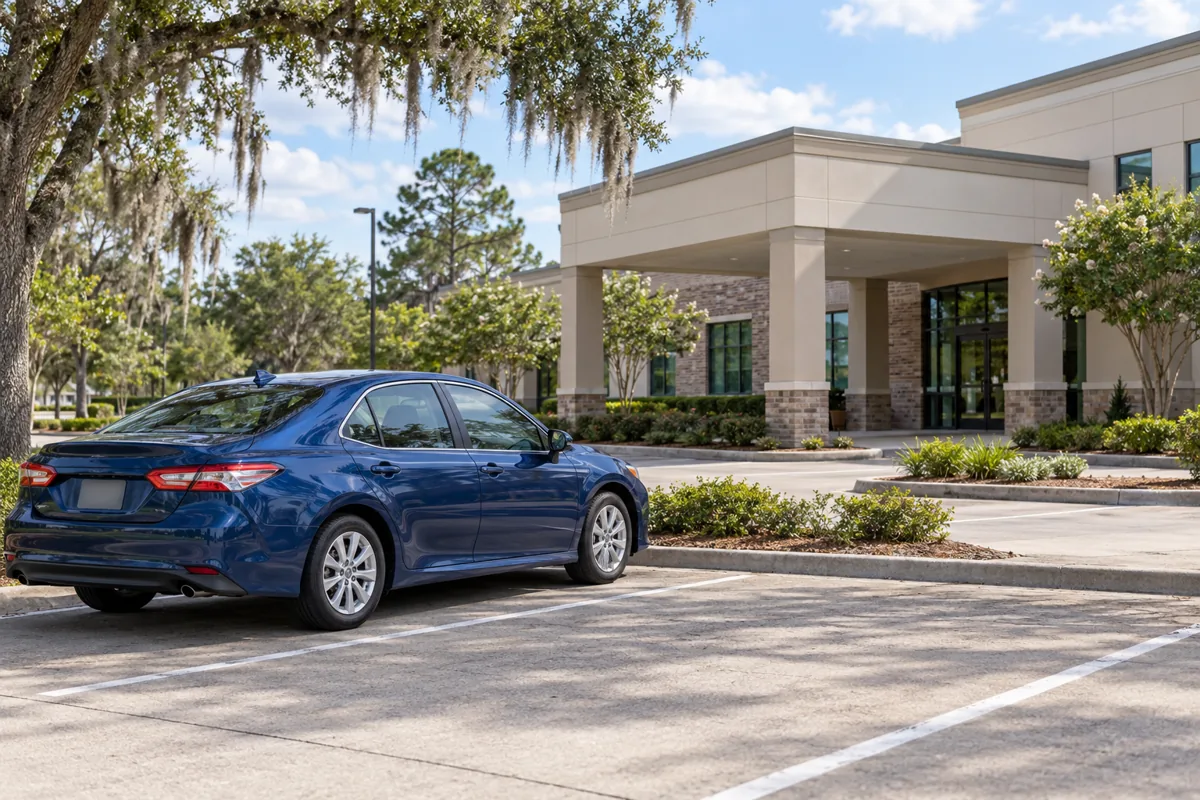
Give the actual facility or parking operator name and the specific lot, garage, row or level where the car sits. A medical campus may include several buildings with different entrances. A clinic address, emergency entrance or patient pickup area can describe where someone is waiting without identifying the disabled vehicle. Label those places separately so dispatch can distinguish the car’s collection point from a person’s meeting location.
Check any map pin against the actual parking description before sharing it. If someone else parked the car or staff relocated it, obtain the current position rather than relying on an appointment confirmation or a remembered entrance. Use fixed identifiers when known and tell dispatch when the location remains uncertain. Avoid sending patient documents to establish a parking position. Practical vehicle and access information is the useful part of the request, while medical records and care details belong with the people handling them.
Ask the relevant property contact about access
Use the facility’s appropriate parking, security or property contact when collection access requires coordination. Ask which approach serves the actual vehicle and whether a representative must meet the operator. State that the inquiry concerns a disabled car rather than assuming the ordinary visitor route answers every collection question. Keep current property instructions separate from dispatch’s review of suitable equipment and the space available around the car.
Explain known gates, garages, overhead restrictions, tightly parked vehicles and controlled areas. Do not direct an operator into a restricted patient or emergency area solely because it is near the driver. Follow instructions from the people controlling the property and do not move barriers or use someone else’s access credentials to simplify entry. If staff propose a different collection point, confirm whether the car has actually moved. Update the request with the new position instead of leaving an old parking instruction active beside a proposed alternative.
Assign vehicle responsibilities without sharing unnecessary care details
Identify who can approve the vehicle service, who holds the working key and who will answer dispatch at collection. Those roles may belong to different people. A relative may coordinate remotely while another person meets the operator, or the owner may be unavailable for part of the discussion. Explain the practical arrangement and keep one current set of vehicle instructions rather than several family members independently changing the destination.
Share only information needed to coordinate the car and any expressly discussed accommodation. Dispatch does not need a diagnosis, appointment paperwork or unrelated patient history to locate a sedan in a parking lot. Keep the care team’s responsibilities separate from the vehicle plan. If the person with the key becomes unavailable, arrange an appropriate reviewed handoff with the responsible contacts instead of leaving the request dependent on an unreachable phone. Do not hide a key on the car or publish private entry details in a public message.
Describe the vehicle and avoid an unneeded second trip
Give the make, model and actual known condition, including key availability and any observed starting, tire, damage or movement issue. Distinguish an observation from a confirmed inspection finding. Do not ask someone to leave an appointment or care setting simply to operate the car for a more definite answer. State what is unknown so dispatch can review what further information is relevant to the proposed service.
Safe overview photographs from an authorized position can show the car and surrounding approach. Avoid including patients, personal documents or bystanders unnecessarily, and do not enter a restricted area to improve the image. If another vehicle blocks access, report that and coordinate through the responsible property contact rather than moving someone else’s property. A photograph supplements the request; it does not establish that a particular truck or loading method can be used at the actual position without review.
Plan the person’s onward travel independently
A vehicle collection does not automatically provide the patient, driver or family with transportation. Ask what accommodation is actually offered and arrange a suitable separate journey through the responsible contacts when needed. Keep care, discharge and personal-assistance decisions with the people qualified and responsible for them. This page does not advise how to move or accompany a person with medical needs, and a vehicle request should not be used as a substitute for that planning.
Label the person’s waiting location separately from the car’s position and identify who will remain reachable during the handoff. Essential belongings may need a different collection plan; discuss that through the responsible person and retrieve items only when safe and authorized. Do not assume that a vehicle receiver also accepts personal belongings for someone else. If the driver leaves the property, update the vehicle contact and key arrangement before relying on collection to continue without them.
Confirm the receiver and the accepted vehicle scope
Name the intended receiver for the car, including the complete address, usable entrance and reachable contact. Confirm acceptance of the vehicle in its actual condition. A nearby repair shop, a family home and the person’s onward destination are different places; none should be inferred from the reason for the medical visit. Coordinate receiving availability with the reviewed service timing instead of assuming an appointment or discharge time guarantees vehicle collection.
Read back the car, pickup point, access contact, keys, receiver and quoted scope with dispatch before approving service. Ask what is confirmed and what remains subject to review. Update the same request if access changes, the owner becomes unavailable or the receiver can no longer accept the car. Retain actual collection and receiving details for the vehicle. Completion of the car’s move does not establish anything about treatment, personal transportation, appointment records or other matters handled by the facility and responsible family contacts.