

B’S TOWING • GREATER NEW ORLEANS
ATV transport inquiries: identify the machine and the pickup that is actually needed
Prefer a callback? Leave your number.
Dispatch confirms availability, equipment, timing and price. A request is not a confirmed booking.
An ATV pickup request can mean moving one recreational machine between properties, collecting a nonrunning unit for repair, or asking about equipment left away from an accessible driveway. Those are different conversations. Tell B’s Towing which situation applies at 504-908-0072. Give the actual machine, its location and a receiver before relying on a proposed move. This guide organizes the inquiry; it does not establish that every ATV, configuration or access route can be accommodated.
On this page
- Name the actual ATV and distinguish it from other equipment
- Describe fitted accessories and what will travel separately
- Explain present condition without attempting an unfamiliar procedure
- Separate an accessible pickup from an off-road location
- Confirm a destination that accepts the machine as it is
- Confirm the scope before calling the move arranged
- Questions and answers
Pickup planning
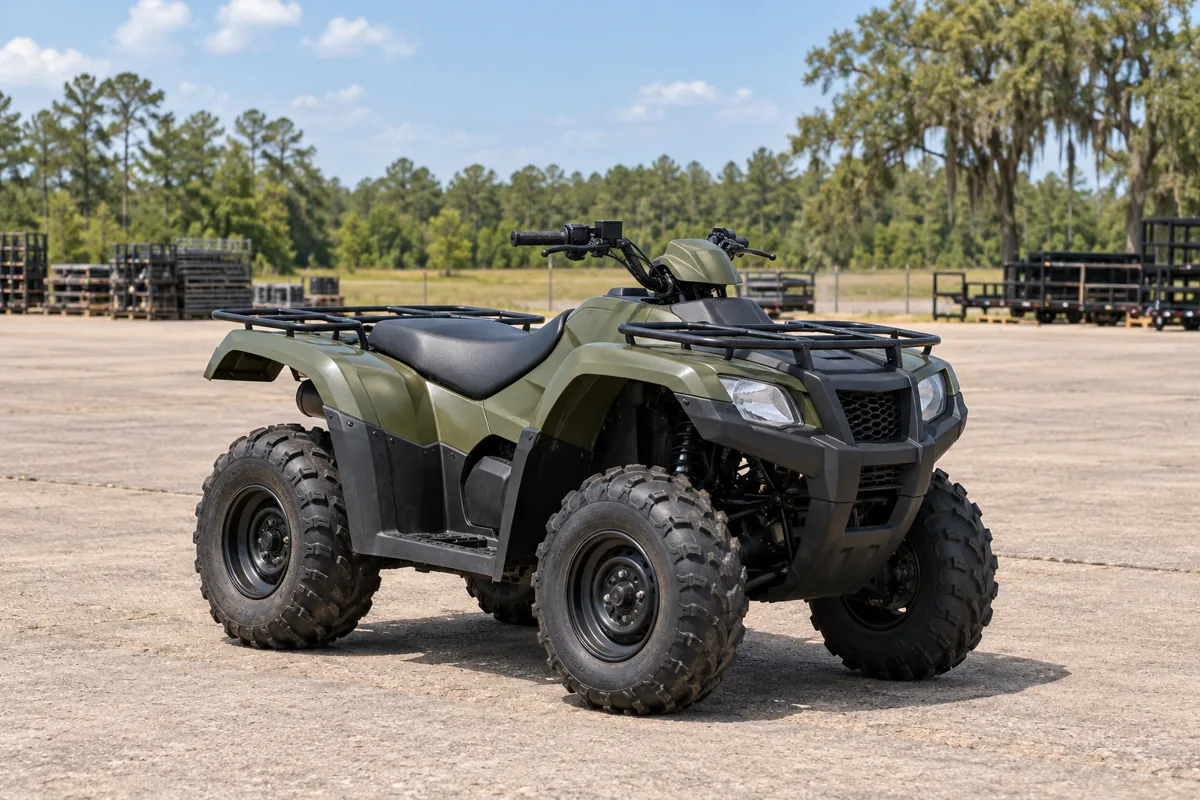
Name the actual ATV and distinguish it from other equipment
Give the manufacturer, model and year when known, along with an agreed identifier if several machines are on the property. Explain whether it is an ATV or a different vehicle such as a side-by-side. A description like small off-road vehicle leaves room for a misunderstanding about the machine being discussed. Keep applicable owner records available rather than assuming a photograph answers every identification question. Honda’s official owner-manual lookup is one example of a manufacturer resource for locating vehicle-specific information; use the source that applies to the actual machine.
State who owns the ATV and who can approve the arrangement. A buyer, seller, rider and property representative may have separate roles. One should coordinate the current instructions so dispatch receives a single machine description and destination. Provide necessary identifiers privately when requested instead of sharing registration paperwork or unrelated account details in a general message.
Describe fitted accessories and what will travel separately
List the visible configuration, including racks, fitted storage, attachments or other accessories that remain installed. Say if a trailer or separate item is also part of the inquiry. A base-model record should not be presented as a complete description of a machine with additional equipment. Give known dimensions and other relevant records with their source, and identify uncertainties rather than substituting a figure for a similar-looking vehicle.
Decide who handles riding gear, loose tools and personal belongings. Those items may need their own handoff even when a vehicle move is accepted. Do not assume a separate trailer, a second ATV or a collection of loose equipment is included in one transport inquiry. Explain the requested result and ask what scope can be offered. If accessories are removed or another machine is substituted after the initial discussion, update the existing request before relying on the earlier review.
Explain present condition without attempting an unfamiliar procedure
Tell dispatch what is known about the machine’s condition, working key and ability to move normally. Distinguish a confirmed inspection finding from something the owner suspects. A planned transfer of a functioning ATV and a recovery inquiry for a damaged one need different information. Do not start, drive or adjust the machine merely to make the description sound more certain. An honest unknown lets dispatch ask for the information relevant to the real request.
Keep applicable manufacturer information available for the operator’s review. This page does not provide loading, towing, lifting or securing instructions for an ATV. If someone has removed parts or attempted repairs, describe the present result rather than the condition before that work began. Identify loose components separately and explain who is responsible for them. A photograph or model name does not establish a handling method or reserve particular transport equipment.
Separate an accessible pickup from an off-road location
Give the machine’s actual position and the entrance that reaches it. Say whether it sits in a paved yard, garage, shed, field or another location. The address of a property may be clear while the final approach remains uncertain. Describe gates, surface conditions, overhead restrictions and space around the ATV without deciding that the route is suitable for a proposed truck. A path the ATV normally uses does not itself answer the transport-access question.
If the machine is away from an ordinary vehicle approach, explain that at the first inquiry. Do not describe a proposed relocation as already completed or move equipment to prove that a path can be used. Name a reachable property contact who can explain access and meet the operator when needed. Safe overview photographs can supplement the description, but permission to enter and technical suitability still require their own review.
Confirm a destination that accepts the machine as it is
Name the intended receiver, full address, usable entrance and reachable contact. Ask the receiver to accept the actual ATV and condition, not simply a generic recreational vehicle. A repair appointment, sale discussion or storage address may leave the physical handoff unresolved. Explain whether keys, records or loose components are being handed over with the machine, and keep any separate property destination explicit.
Coordinate the receiving window with the pickup contact and dispatch’s available service. Do not assume the ATV can be left at a closed business or that temporary storage is available. The rider’s own travel is separate from the machine’s movement; ask what accommodation is offered and arrange another journey when needed. If a buyer or repair shop changes the receiving address, replace the earlier instruction clearly and ask for review of the revised route and scope.
Confirm the scope before calling the move arranged
Read back the identified machine, current configuration, known condition, collection approach and receiving arrangement with dispatch. Ask what has been accepted, what remains pending and what the quoted scope includes. A message or form submission is a request for review until the arrangement is confirmed. A preferred collection time should be discussed as a constraint rather than treated as a promised arrival.
Keep one coordinating contact available through collection and receiving. Report a relocated machine, added accessory, changed key holder or unavailable receiver through the existing request, stating which earlier information is replaced. Retain the actual machine identification and handoff details. Completion of a transport establishes the movement that occurred; it does not certify operating condition, settle a sale or confirm completion of repair work that another business is responsible for reviewing.
Questions about this pickup
Related planning and service
Manufacturer identification and manual resources
These manufacturer resources help locate records for their own equipment. Match the actual model and unit before using a manual; these links do not select a transport method.