

B’S TOWING • GREATER NEW ORLEANS
Box truck breakdown dispatch planning
Prefer a callback? Leave your number.
Dispatch confirms availability, equipment, timing and price. A request is not a confirmed booking.
A box truck breakdown request should describe the whole vehicle, its current load and its exact location. The box body alone does not establish size, weight or handling condition. Call B’s Towing at 504-908-0072 to discuss the actual truck and service availability. This guide organizes dispatch information; it does not guarantee capacity for every commercial truck, approve a recovery method or promise cargo transfer. Keep driver, company and receiving responsibilities clear while the actual vehicle request is reviewed.
On this page
- Identify the complete commercial configuration
- State loaded condition and company responsibility
- Report the breakdown and control limitations
- Give precise pickup access and route information
- Confirm a receiver for this truck and condition
- Maintain the reviewed company instruction
- Questions and answers
Pickup planning
Identify the complete commercial configuration
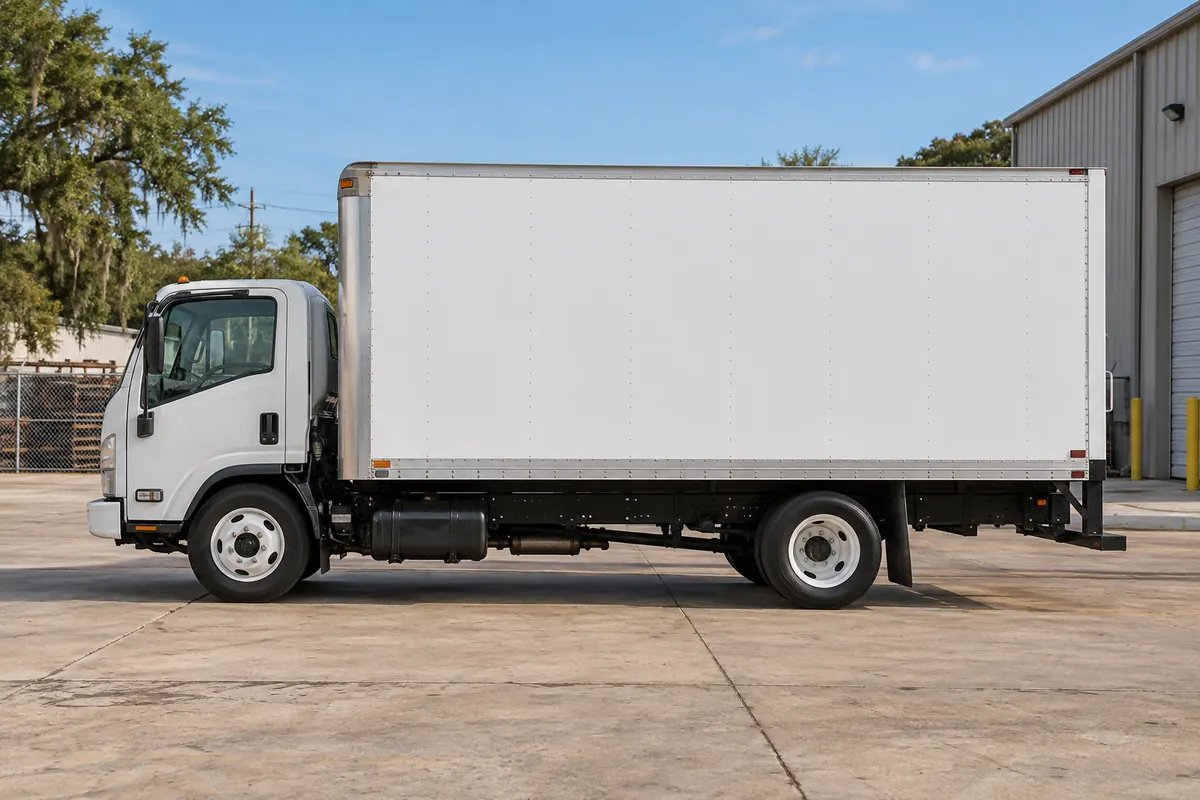
Provide the truck’s year, make, model and company identifier when available. Describe the box body and any installed lift equipment, racks, attachments or trailer connected to the vehicle. Identify relevant dimensions from reliable company or vehicle records and state what they cover. A familiar fleet unit number may help the company but does not tell dispatch the vehicle’s actual configuration. Do not substitute another truck’s specification merely because it has the same style of cargo body or appears similar.
Explain whether the vehicle has been modified or fitted with equipment that changes its original dimensions. A roof installation, rear accessory or changed body can matter to the access review. If the driver does not know a measurement, identify a fleet contact or record that may supply it. Keep estimates labeled and avoid asking the driver to climb, enter traffic or reach beneath the truck for a better description. The request should use reliable current information while leaving unresolved details visible for further review.
State loaded condition and company responsibility
Tell dispatch whether the truck is empty, partly loaded or loaded. Provide known weight information and identify whether it describes a rating, the cargo or the actual vehicle in its present state. These figures are not interchangeable. Describe any known shifted contents, damaged packaging or special requirement relevant to the request, using the company’s responsible contact where needed. Do not open an unsafe cargo area or attempt a transfer to improve the information available for a towing inquiry.
Identify who can authorize vehicle service and who decides what happens to the load. Those roles may be separate. A customer’s delivery deadline does not automatically give the driver authority to change custody or receiving arrangements. Ask dispatch what can be offered for the actual loaded vehicle, and arrange any cargo transfer, storage or special handling explicitly with the appropriate responsible provider. A general heavy-duty service description should not be treated as a promise that every load-related task is included in a transport quote.
Report the breakdown and control limitations
Describe what happened and the truck’s present condition without diagnosing an unseen failure. State known facts about starting, rolling, steering and braking separately. Mention key availability, visible damage, a wheel that will not turn or a control limitation reported by the driver. A running engine does not establish that the vehicle can move normally. If another person is relaying the request, explain whether the condition information is current and identify who can answer immediate questions from the vehicle’s location.
Do not operate unfamiliar mechanisms, release controls or move the truck simply to produce a definite answer for dispatch. Use the actual manufacturer and company information already available rather than procedures copied from another truck. This guide supplies no brake, driveline, lifting or recovery instructions. If there is an immediate danger, use the appropriate emergency channel. Keep the towing request factual so dispatch can review the real situation and the operator can assess the actual vehicle and location before handling decisions are made.
Give precise pickup access and route information
Provide the actual pickup location and, where relevant, direction of travel or the entrance that reaches the truck. A customer’s front-office address may not identify a rear loading area. Explain the truck’s position, surface, surrounding space and any gate, overhead feature or restricted approach known to the driver. Do not use the cargo’s destination as the disabled truck’s location. Label a meeting point separately when the driver is waiting somewhere other than beside the vehicle.
Identify the authorized property contact when the truck is inside a yard, at a customer business or behind a controlled gate. Confirm access hours and who can admit the requested service. Safe photographs can help show the whole truck and working area, but they do not certify equipment fit or an available route. Do not move barriers or direct unauthorized access across another property. If construction, parked vehicles or gate status changes after the request, provide the revised facts rather than relying on the original site description.
Confirm a receiver for this truck and condition
Contact the intended repair facility or company yard and describe the actual configuration, load and known limitations. Confirm that it accepts the vehicle in this condition during the proposed window. A shop able to discuss a box truck repair may still need a specific receiving arrangement for a loaded or nonrolling unit. Provide the full destination, usable entrance and reachable contact. Keep cargo custody or special contents requirements separate from general acceptance of the disabled vehicle.
Ask about the key handoff and what should happen if the receiving person becomes unavailable. Do not assume a yard’s listed opening hours establish an unattended delivery process or authority to choose any open parking space. If another company representative must meet the truck, confirm that person’s role and availability. A changed destination can affect the requested scope even if it is nearby. Relay the replacement instruction to dispatch and ask for review before presenting the revised handoff as already arranged.
Maintain the reviewed company instruction
Ask dispatch whether the particular truck request can be offered using the current dimensions, loaded condition, access and receiver. Clarify what the quote covers and which unknown facts must be resolved. A preferred pickup window or business deadline is not a confirmed booking. Identify the person authorized to approve service and keep the driver’s separate travel arrangement clear. Do not infer passenger capacity or a replacement delivery vehicle from a conversation about moving the disabled truck.
Use one current service reference and coordinate company updates through the responsible contact. Report changes to cargo, vehicle condition, keys, access, driver availability or receiving instructions promptly. State which earlier information is replaced and ask for acknowledgment when necessary. Keep actual collection and delivery confirmation with the company’s operational record. Transport completion does not automatically close a cargo issue, customer delivery, maintenance authorization or company incident report; follow those separate processes with the people responsible for each decision.