

B’S TOWING • GREATER NEW ORLEANS
Travel trailer breakdown: identify the trailer, tow vehicle and separate moves
Prefer a callback? Leave your number.
Dispatch confirms availability, equipment, timing and price. A request is not a confirmed booking.
A travel trailer problem can involve a trailer, a tow vehicle and people who need separate arrangements. Identify all three without assuming they can move together or that a motorhome service description applies. Call B’s Towing at 504-908-0072 to ask about the actual help available. This guide prepares a transport inquiry; it does not guarantee trailer capability, supply hitching or recovery instructions, or establish that accommodation and belongings are included.
On this page
- Identify the trailer from its actual records
- Describe the tow vehicle and whether it is attached
- Explain the complete pickup setting
- Plan occupants and personal essentials separately
- Confirm receiving for each unit that may move
- Review scope without presuming trailer capability
- Questions and answers
Pickup planning
Identify the trailer from its actual records
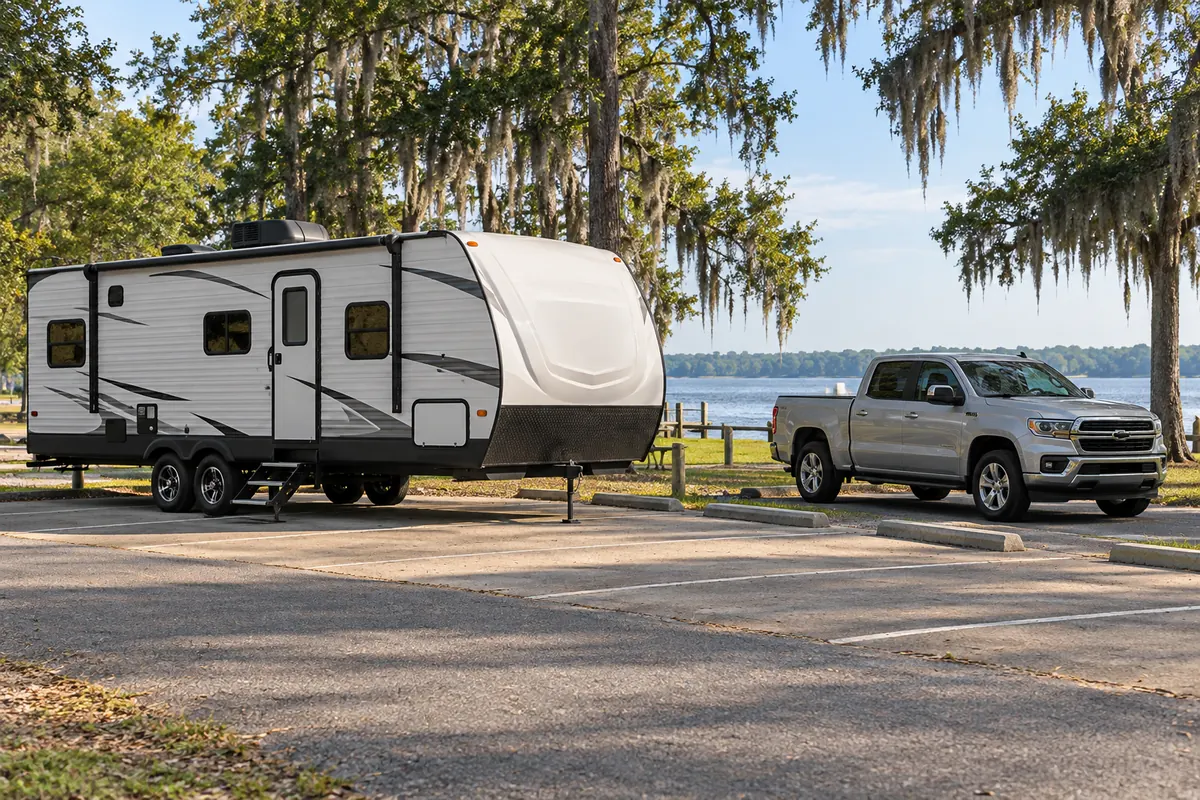
Provide the trailer type, manufacturer, model and identifying records available to the responsible owner. Explain that it is a travel trailer rather than a motorhome or another kind of trailer. Include relevant dimensions and current loaded information from applicable records when known, while clearly labeling estimates and missing details. Do not turn a marketing category or the tow vehicle's description into a complete account of the trailer being presented for review.
Describe fitted accessories, current contents and any visible changes from the documented configuration. Keep the source of a figure attached to it so dispatch can distinguish a specification from the actual present load. Do not invent a weight, hitch compatibility or equipment capacity. If the trailer belongs to a rental business or another person, identify the contact who can provide records and approve the proposed arrangement before treating a preferred movement as accepted.
Describe the tow vehicle and whether it is attached
Give the tow vehicle's make, model and condition separately from the trailer. State whether the two are currently connected, separated or in an uncertain state. Explain what happened and which part of the combination is affected. A disabled tow vehicle and a trailer with a damaged wheel create different descriptions, and the request should not leave dispatch to infer which unit needs help.
Report known keys, starting, rolling, steering or braking information for the relevant vehicle without performing a test or changing the combination for the inquiry. This guide does not provide hitching, unhitching or control-release procedures. If someone has already moved or separated a unit, explain the actual result and present position. Keep any earlier photographs in context; the reviewing party needs the current configuration rather than a picture from before the situation changed.
Explain the complete pickup setting
Give the actual trailer position, usable entrance and property contact when access is controlled. Describe paved space, surface changes, gates, overhead restrictions and other visible obstacles. An RV park or campground address may point to an office rather than the unit's position. Identify the actual space and approach without assuming every lane on a map is available for the proposed service.
Safe overview photographs can show the combination and its surroundings while excluding private documents and unrelated campers. Do not move the trailer, operate accessories or enter a restricted area to produce them. If a site manager has access instructions, report their source and confirm they are current. Access permission does not itself establish equipment suitability, so keep the property arrangement separate from the operator's review of the actual vehicle and trailer.
Plan occupants and personal essentials separately
Explain how many people need an onward plan and whether pets, mobility equipment or essential belongings affect that arrangement. Ask about the service offered rather than assuming seats, accommodation or storage are included in a trailer inquiry. The trailer's destination may not be a suitable waiting place for its occupants, and a repair appointment does not resolve where people will stay while the unit is unavailable.
Assign a responsible person to personal belongings and keys. Only retrieve items when the circumstances permit safe authorized access. Avoid sending dispatch an unnecessary inventory of valuables, private travel records or personal documents. If people leave with another provider, keep a reachable vehicle contact who knows the trailer's configuration, pickup position and receiving plan. The purpose is to prevent an accepted vehicle discussion from leaving the human travel plan unaddressed.
Confirm receiving for each unit that may move
Identify the proposed receiving destination for the trailer and, separately, the tow vehicle if both are involved. Ask the actual business or property contact whether it accepts the described unit and condition. Give complete addresses, usable entrances, receiving contacts and confirmed windows. A shop that handles the tow vehicle may need a separate discussion before accepting the trailer; do not treat one appointment as acceptance of both.
Ask dispatch what can be reviewed as one arrangement and what requires separate scope or another provider. Do not assume the combination will travel together or that an additional stop is included. If the receiver cannot accept the current condition or configuration, resolve that before relying on the destination. Keep the final current plan in plain language so keys, owner approval and receiving instructions are matched to the correct unit.
Review scope without presuming trailer capability
Use the actual trailer, tow vehicle, load information, location and receiving needs to ask about available service. Clarify equipment review, availability, timing and price, including any limitation or question that remains pending. This page does not establish that B’s Towing handles every travel trailer or combination. A form submission or prior successful move should not be treated as approval for the present situation.
Report changes through the same request: a unit is moved, a connection state changes, a receiver declines intake or a key holder leaves. State which earlier information is replaced. Keep the coordinating contact reachable through the accepted handoff and retain actual delivery records for each unit. Transport completion is separate from a repair, safety inspection or return-to-travel decision; follow the relevant processes for the real condition afterward.