

B’S TOWING • GREATER NEW ORLEANS
Boat-trailer breakdown: identify the boat, trailer and tow vehicle separately
Prefer a callback? Leave your number.
Dispatch confirms availability, equipment, timing and price. A request is not a confirmed booking.
A boat-trailer breakdown can involve the road trailer, its tow vehicle and a boat that is still on the trailer. Those are separate parts of the request. Tell B’s Towing exactly what is present and what you want reviewed at 504-908-0072. A description such as boat towing does not explain whether the inquiry concerns a disabled road vehicle, a loaded trailer or a different type of service. This guide helps prepare the information; availability and the accepted scope require direct confirmation.
On this page
- Explain which part of the combination needs help
- Gather records for the actual loaded trailer
- Describe the stopping place and approach
- Keep handling decisions with the actual service review
- Confirm a receiver for each proposed movement
- Confirm scope before treating the trip as arranged
- Questions and answers
Pickup planning
Explain which part of the combination needs help
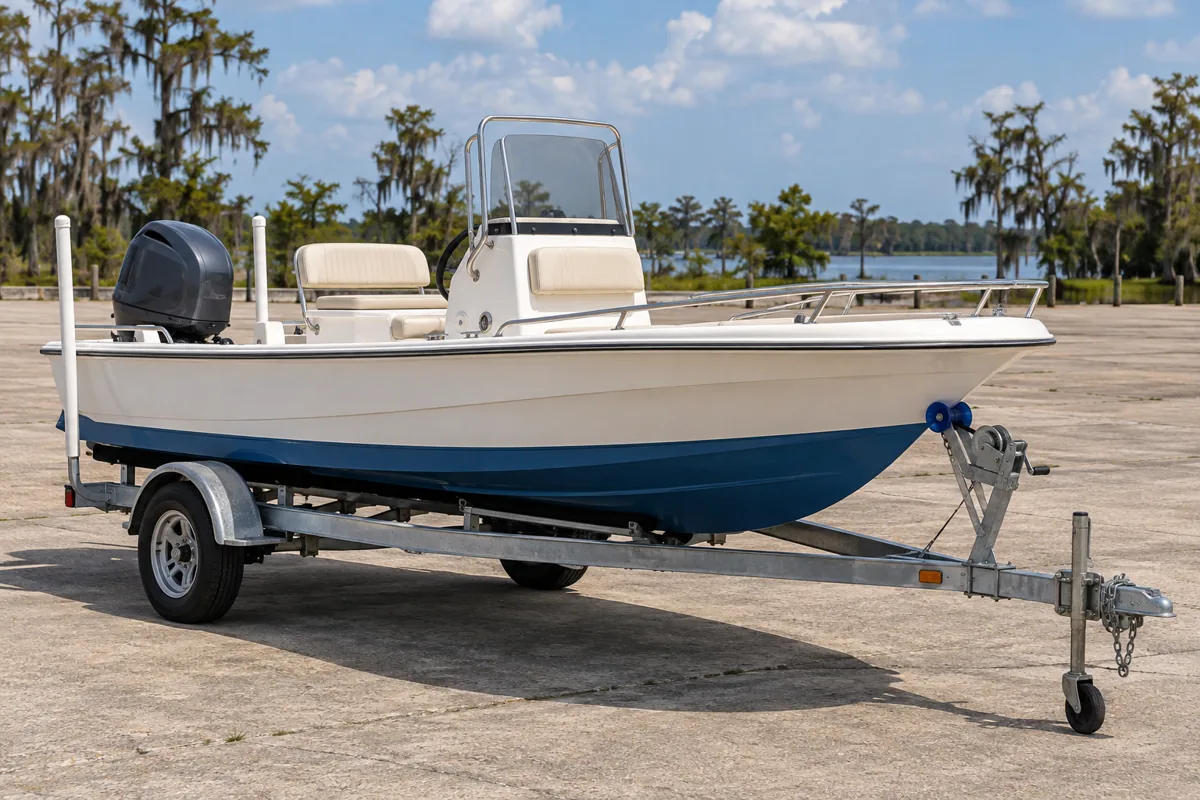
Start with what happened and which components remain together. Identify the tow vehicle, road trailer and boat independently. Say whether the trailer is attached, where the combination is sitting and whether anyone has already moved part of it. Describe the requested result in plain language: for example, reviewing a disabled tow vehicle and a trailer that still needs a receiving plan. Do not assume that accepting one component means every other component is included.
Give the actual condition that is known about each part. A tow vehicle that starts but cannot continue, a damaged trailer wheel and an unrelated boat issue describe different requests. Avoid reducing those observations to one guessed diagnosis. If another provider is already handling part of the situation, explain that arrangement so dispatch can distinguish a new inquiry from duplicate assistance. Keep one coordinating contact who can answer questions about the entire combination while allowing each proposed movement to be reviewed separately.
Gather records for the actual loaded trailer
Have the trailer and boat identification information available, along with relevant owner or manufacturer records. Give known dimensions and the present configuration, identifying the source of the information. A model name or a figure for an empty trailer should not be presented as a confirmed description of the complete loaded combination. Tell dispatch when dimensions or weight information are unavailable instead of supplying a number that only appears plausible.
Include fitted accessories and anything that changes the visible configuration. Explain whether the boat remains on its trailer and whether loose belongings or gear are still present. Keep detailed personal-property inventories with the responsible owner; dispatch needs relevant service information rather than unrelated account or registration documents sent broadly. Do not remove equipment, change supports or alter the load to make it match a preliminary inquiry. The operator needs to review what is actually present, and applicable manufacturer information should remain available for that review.
Describe the stopping place and approach
Give the exact road or property location and a safe description of where the combination sits. If the situation involves a roadway, distinguish the vehicle position from where people are waiting. Follow instructions from responders or the property representative controlling access when applicable. Do not enter traffic or move around the combination to obtain a more detailed photograph. Send existing information and clearly identify what remains uncertain.
At a marina, storage yard or other private property, name the entrance that leads to the combination and the person who can permit collection. A waterside address may include several separate parking, storage or service areas. Describe gates, surface conditions, turns and the available space without approving an equipment route yourself. If staff propose relocating the trailer, report the new position only after it is confirmed. Access permission and technical suitability are separate questions, and both belong in the discussion before relying on a collection arrangement.
Keep handling decisions with the actual service review
Explain observed damage or difficulties without prescribing a loading, recovery or separation method. Tell dispatch about any known problem with a wheel, tire, coupling or another component, and say whether that information was confirmed by someone who inspected it. Do not test the combination or attempt an unfamiliar adjustment simply to give a firmer answer. An honest unknown is more useful than a confident handling claim based on the appearance of the boat or trailer.
Keep appropriate records available and identify a responsible owner or representative who can answer configuration questions. Do not treat this page as instructions for disconnecting, lifting, supporting or securing the boat or trailer. A service inquiry does not establish that a proposed technique or equipment choice is suitable. If another person changes the combination after the initial call, update the request. Dispatch and the operator should review the present situation rather than work from an earlier description that no longer matches it.
Confirm a receiver for each proposed movement
Identify where each component is proposed to go and who can receive it. A repair shop that accepts the tow vehicle may not have agreed to receive a boat on a trailer. A storage address may have different access, space or release requirements from a service business. Confirm the actual arrangement with each receiver and provide the complete addresses and usable entrances rather than leaving dispatch to infer them from a marina or shop name.
Explain whether the components should remain together or whether separate movements are being requested, while leaving suitability for review. Keep the driver’s and passengers’ onward travel separate from vehicle or trailer transport. Ask what accommodation is offered instead of assuming seats or luggage handling are included. If receiving windows conflict, discuss that before relying on pickup timing. An online message with several possible destinations does not establish an accepted plan for where every component will be delivered.
Confirm scope before treating the trip as arranged
Read back the actual components, condition, pickup entrance, receiving contacts and proposed destinations with dispatch. Ask which parts of the request have been accepted, what remains under review and what the quoted scope includes. Distinguish a requested deadline from confirmed availability. A boat-trailer inquiry does not reserve marine assistance, water recovery or every type of transport simply because the word boat appears in the message.
Update the same request when the load changes, another provider accepts part of the work, a trailer is moved or a receiver becomes unavailable. State which previous instruction is replaced so several incompatible plans do not remain active. Retain the actual handoff details for the tow vehicle, trailer and boat as applicable. Delivery records should describe what happened, while repair decisions, property arrangements and any separate onward journey remain with the responsible parties until those matters are actually resolved.