

B’S TOWING • GREATER NEW ORLEANS
Enclosed cargo-trailer inquiries: identify the trailer, contents and separate vehicle needs
Prefer a callback? Leave your number.
Dispatch confirms availability, equipment, timing and price. A request is not a confirmed booking.
An enclosed cargo-trailer request needs more detail than a description of a box on wheels. Dispatch needs to know which trailer is involved, what is known about its present condition, whether contents remain inside and whether a separate tow vehicle also needs help. Contact B’s Towing at 504-908-0072 to describe the actual situation and ask what service can be reviewed. This guide organizes an inquiry; it does not confirm trailer capacity, roadworthiness, a connection method or availability for a particular move.
On this page
- Identify the trailer without relying on a general size label
- Describe what remains inside and who controls the contents
- Separate trailer movement from a tow-vehicle breakdown
- Describe collection access around the entire trailer
- Prepare a receiver for the trailer and any separate property
- Confirm what has been accepted and report changes promptly
- Questions and answers
Pickup planning
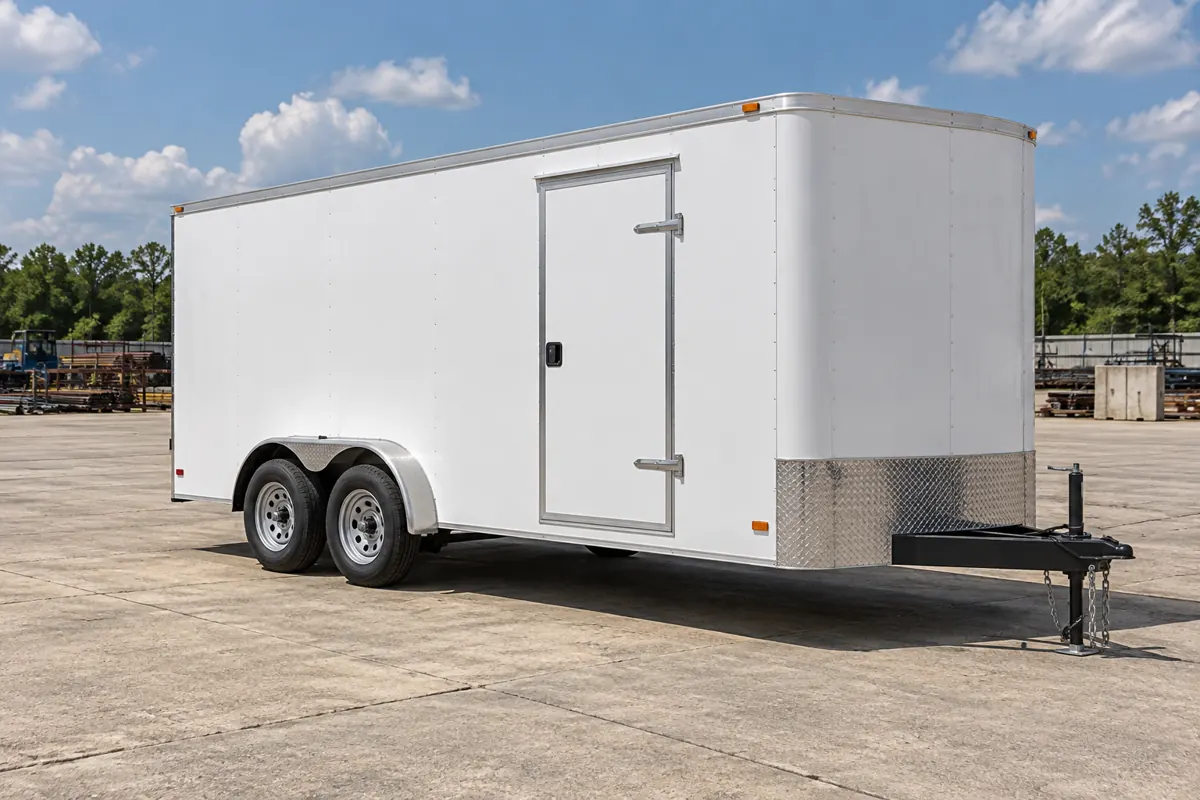
Identify the trailer without relying on a general size label
Give the manufacturer, model and year when known, along with owner records applicable to the actual trailer. Say that it is an enclosed cargo trailer rather than a travel trailer or another type of unit. Identify the trailer clearly if several are stored at the same property. A phrase such as medium trailer may help start a conversation, but it should not replace available records or a description of the configuration presented for review.
Mention fitted external equipment, roof additions or other visible modifications, and explain where dimensions or other figures came from. Do not present a guessed measurement as a manufacturer specification. If a figure describes an empty base model, make that source clear instead of implying it describes the present loaded trailer. Keep identifying documents available privately when requested. A photograph can supplement a description but does not establish the full unit record or a suitable method for moving it.
Describe what remains inside and who controls the contents
State whether the trailer is empty, loaded or of uncertain contents. Describe the general nature of the property without sending unnecessary customer or business records. A trailer used for tools, household goods or another purpose creates its own coordination questions. Name the person who can give an accurate contents description and authorize any related decisions. Do not assume an empty-weight record describes the trailer’s current total condition or that locked doors settle every question about what travels with it.
Explain whether someone intends to remove contents before collection. Distinguish a proposed unloading arrangement from work that has actually been completed. This guide does not provide cargo packing, securing, hazardous-material or load-handling instructions. If contents cannot be identified or the description changes, tell dispatch before relying on a previous review. A quote or acceptance based on one description should not be treated as unchanged when additional property is added or a different trailer is substituted.
Separate trailer movement from a tow-vehicle breakdown
Explain whether the trailer is detached, connected to a vehicle or located separately from the vehicle that normally pulls it. If a tow vehicle is also disabled, identify that vehicle and its location as a separate part of the inquiry. Be clear about the result requested: moving the trailer, helping with the vehicle, reviewing both units or coordinating separate destinations. A request about one unit does not automatically reserve service for the other.
Describe the present trailer condition and any known damage using observations rather than assumptions about repairability. State what is known about keys, locks and access to the relevant records. Do not disconnect, connect or adjust equipment solely to fit a presumed transport plan. The actual operator’s assessment and applicable unit information determine the reviewed arrangement. Changes to the tow vehicle, trailer condition or connection status should be reported through the same request so dispatch is not working from an earlier situation.
Describe collection access around the entire trailer
Give the street address and exact collection position, including the entrance used to reach the trailer. Explain whether it is in a storage row, business yard, driveway or other setting. Mention adjacent parked vehicles, gates, overhead features, surfaces and space around the unit. A pin at the front office of a large property may leave the final approach unclear. Describe the facts without deciding that a particular truck can reach the trailer or complete a proposed movement.
Establish a reachable property contact and the person authorized to release the trailer. Coordinate any gate, storage-office or business receiving hours that affect the visit. Permission from an owner does not itself supply a locked-property access arrangement. If someone relocates the trailer before collection, give its confirmed new location and state which earlier instruction is replaced. Avoid asking a person to perform an unfamiliar maneuver simply to make the location match an assumed transport arrangement.
Prepare a receiver for the trailer and any separate property
Name the destination, usable entrance, receiving contact and window. Tell the receiver which trailer is proposed, its current condition and whether contents remain inside. A storage agreement, repair appointment or residential address may not establish who will accept the unit at the actual handoff. Clarify whether a tow vehicle, loose equipment or contents have different destinations rather than leaving several movements bundled into one unclear address.
Confirm the receiver’s availability before treating a preferred collection time as workable. Ask dispatch to review the route, scope and any change from the original inquiry. Do not assume an unattended drop, storage between locations or another trip is included. The people involved also need their own travel arrangements; trailer movement does not establish passenger accommodation. Keep one coordinating contact available so the releasing party and receiver can resolve a changed entrance or receiving window through the current request.
Confirm what has been accepted and report changes promptly
Read back the trailer identification, present load description, known condition, relationship to any tow vehicle, collection access and intended receiver. Ask what service is available and what details remain pending. Discuss the quoted scope using the actual units and destinations. An initial message is a request for review rather than a confirmed booking or a guarantee that a particular trailer can be accommodated. Keep uncertainty visible instead of replacing it with a convenient assumption.
If contents are added, a trailer is exchanged, a gate contact changes or the receiving site becomes unavailable, update dispatch through the existing conversation. Clearly identify the earlier instruction being replaced. Keep the final handoff record tied to the unit and property actually moved. Completion of transport does not certify the trailer for further road use, determine insurance coverage, confirm the condition of unseen contents or settle ownership questions that belong with the relevant parties.