

B’S TOWING • GREATER NEW ORLEANS
Vehicle pickup at an apartment community
Prefer a callback? Leave your number.
Dispatch confirms availability, equipment, timing and price. A request is not a confirmed booking.
A disabled vehicle at an apartment community can be difficult to locate even when the street address is correct. Buildings, resident gates, visitor areas and internal drives may use different routes. Call B’s Towing at 504-908-0072 to discuss a requested pickup and availability. This guide concerns an authorized vehicle service request. It does not interpret a lease, establish property enforcement authority or request removal of someone else’s vehicle. Keep the owner’s service arrangement and the property’s access instructions clear from the beginning.
On this page
Pickup planning
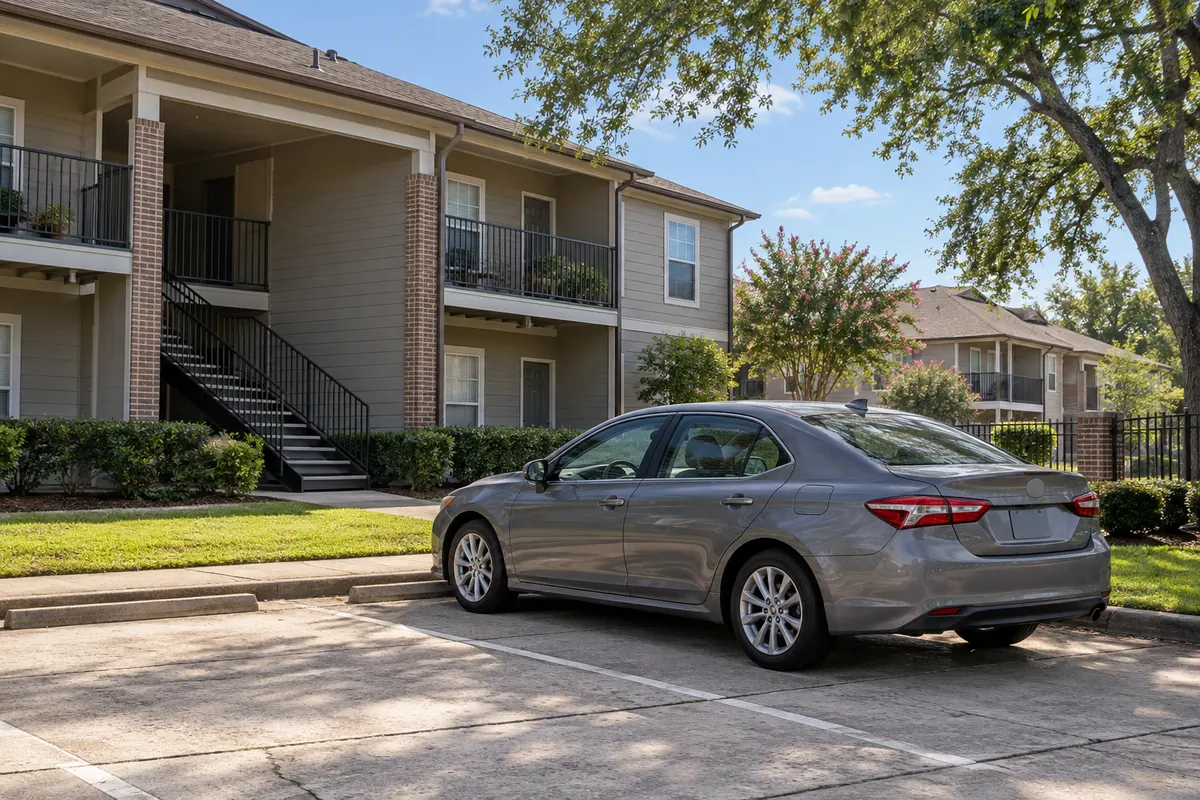
Identify the exact vehicle position
Give the community name, full address and building or section that helps locate the vehicle. Add the marked parking stall, nearby fixed landmark and whether the space is covered or within a separate structure. Do not rely solely on an apartment unit number, which may point to a pedestrian entrance rather than the vehicle. Explain whether you are standing with the car or waiting at another location. A pin from inside a residence should be labeled if it does not identify the parked vehicle.
Describe which internal drive reaches the space and whether several buildings share the same address. Some properties have similarly numbered buildings or separate resident and visitor lots. Use the labels actually displayed by the community instead of inventing a description that only one resident understands. If a property map is already available, identify the relevant part without publishing private resident information. Tell dispatch when the vehicle has moved since an earlier message, even if it remains within the same community and uses the same street address.
Describe parking restrictions and the working space
Explain whether the vehicle is nose-in, against a wall, between occupied spaces or beneath a low cover. Report visible obstructions, narrow turns and nearby construction along the approach. If the vehicle is in an enclosed parking structure, provide its level and relevant posted restrictions rather than assuming an open-lot description is sufficient. Do not infer equipment fit from a neighbor’s vehicle or from a previous unrelated pickup. Dispatch and the operator need to review the actual location and current vehicle position.
Do not push the car into an internal drive or move other residents’ vehicles to match an assumed collection method. Ask the responsible property contact about any authorized clearance arrangement, and report it as pending until completed. Take overview photographs only from a safe permitted position. An image can explain the space around the vehicle without establishing that equipment fits or that a blocked path will be available. If the area changes after the initial request, update dispatch before treating the earlier access description as current.
Report ownership contact, keys and vehicle condition
Identify the person requesting service for the vehicle and who will handle the pickup. If the owner cannot attend, discuss that situation explicitly with dispatch and follow the accepted handoff process. Do not assume that being a resident authorizes movement of another person’s car. Keep property management’s entry role separate from the vehicle owner’s service instruction. If someone else is coordinating remotely, identify who can answer current condition and access questions at the community.
Provide the make, model, known key availability and separate facts about starting, rolling, steering and braking. Explain recent damage or a known wheel limitation instead of using only the phrase broken down. Do not operate or reposition the car to produce an answer. Say what is unknown and who may have the information. If a spare key is being brought by another person, identify the actual status; expected key arrival should not be described as the key already being available for an immediate handoff.
Confirm the vehicle destination and people’s travel
Give dispatch the accepted destination for the vehicle, including a usable entrance and receiving contact. A repair appointment or preferred business name does not by itself confirm receiving at the proposed time. If the vehicle is going to another residence, arrange permission and access there as well. Do not let solving the apartment gate question leave the delivery handoff unresolved. Keep any private receiving instructions within the agreed communication process and explain when a receiver’s availability is limited.
Arrange residents’ or passengers’ travel separately from movement of the vehicle. Do not assume that a tow request includes seats, pet transport or accommodation for personal equipment. If the person with the keys needs to leave for work, coordinate the vehicle handoff before they go rather than assuming unattended collection has been accepted. Identify a reachable replacement contact when necessary. Distinguish the operator meeting point, passenger ride location and vehicle destination so a single pin or message is not asked to represent all three arrangements.
Keep one current request through the handoff
Ask dispatch to review service availability using the actual vehicle condition, gate arrangement, parking position and accepted receiver. Explain access windows as planning information rather than a confirmed pickup time. Clarify what remains pending with management or the key holder. A form submission does not establish that the property has approved access or that equipment is available. Keep the current instruction in one service request so changes do not create competing pickup plans from a resident, a relative and a property employee.
Update dispatch if the gate closes, a property contact leaves, neighboring spaces become blocked or the car is moved. State which earlier instruction is replaced and ask for acknowledgment when the change affects the arrangement. Retain actual collection and delivery confirmation under the agreed process. Completion of the vehicle service does not decide a separate lease, parking enforcement or property dispute. Those matters remain with the responsible parties rather than becoming assumptions embedded in an authorized roadside or transport request.