

B’S TOWING • GREATER NEW ORLEANS
Two flat tires at once: what to tell towing dispatch
Prefer a callback? Leave your number.
Dispatch confirms availability, equipment, timing and price. A request is not a confirmed booking.
Two flat tires change the service request immediately. One spare may help with one wheel, but it does not restore a vehicle with another unusable tire. When contacting B’s Towing, open with the number of damaged tires instead of simply asking for a tire change. Identify their positions if you know them: front or rear, driver or passenger side. If you cannot safely see the second wheel, describe what is confirmed and what is uncertain.
On this page
- Start by saying there are two damaged tires
- A two-tire problem is different from a missing spare
- Explain the event that damaged the tires
- Be precise about wheel position and movement
- Describe the route to the car, not just its address
- Choose a receiver that can address both tires
- Confirm the scope before approving service
- Questions and answers
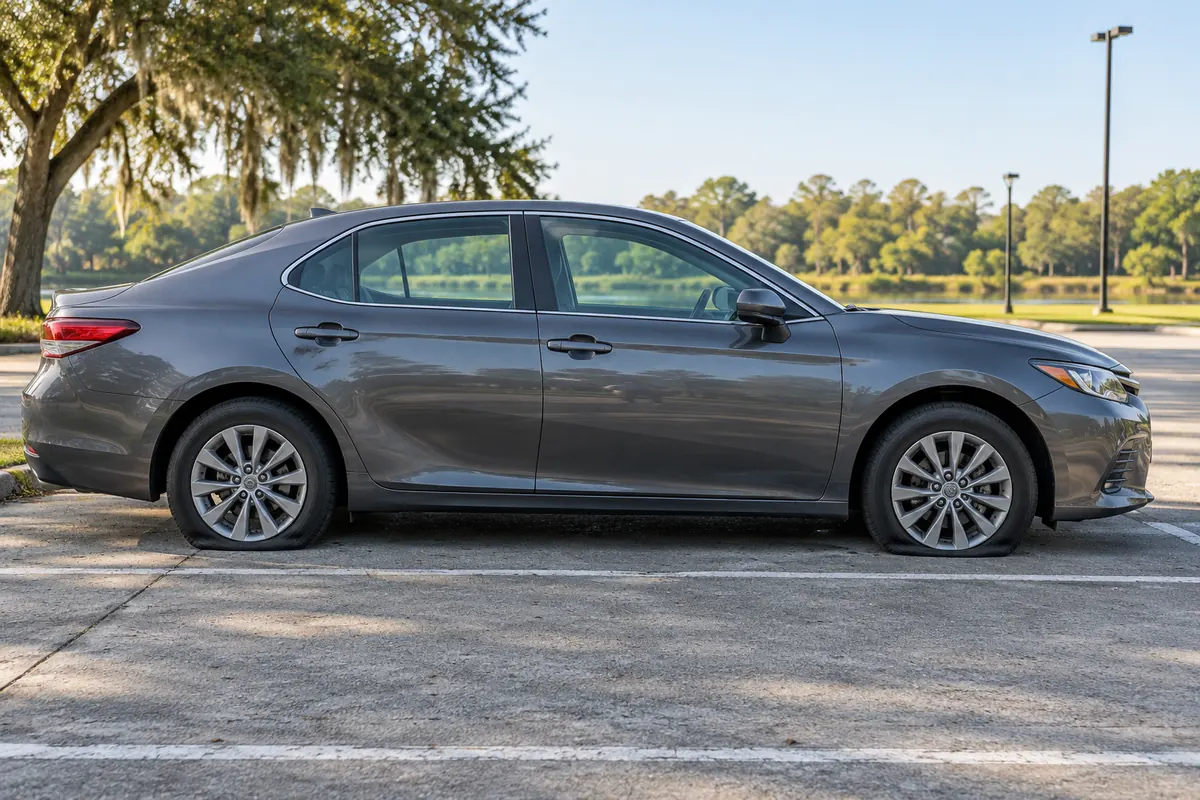
Start by saying there are two damaged tires
The next question is how the vehicle can be handled at its actual location. A vehicle with multiple damaged tires may need transport and a loading assessment. The operator determines handling after reviewing the condition and access. This guide prepares you for that conversation; it does not provide instructions for driving on flat tires, moving the car on a spare, or attempting a roadside recovery.
A two-tire problem is different from a missing spare
With one flat tire and no spare, the unresolved issue is whether that one tire can be addressed or the vehicle should be transported. With two damaged tires, installing a single spare can still leave a wheel unsuitable for driving. Describe both problems before discussing a service price. That gives dispatch a more accurate picture than a request labeled tire change with the second damaged tire mentioned only after arrival.
Do not assume two spares from other vehicles will solve the problem. Compatibility and manufacturer requirements need to be established, and the working position still matters. If another person has offered a spare, tell dispatch exactly what is available without presenting it as an approved solution. The right plan comes from the vehicle, the tires and the assessment, rather than from the number of spare wheels someone can bring.
Explain the event that damaged the tires
Tell dispatch whether both tires lost pressure while parked, after striking a pothole or curb, or during another event. Report what you observed, including a loud impact, visible wheel distortion, unusual steering, or the vehicle stopping in an awkward position. These details help distinguish a tire-only report from a situation that may also involve wheel or suspension damage. They do not require you to name a failed component.
If there was a collision, mention it rather than describing the job only as two flats. Recovery access, vehicle condition and any authority controlling the scene can affect the arrangement. Emergency services take priority where there is injury or immediate danger. Do not collect photographs from traffic or stand in an exposed area to improve the information in a routine towing request.
Be precise about wheel position and movement
Identify whether the damaged tires are on the same side, the same axle, or opposite corners when safely known. Describe a wheel that is turned sharply, visibly bent, separated, or pressed against bodywork. Tell dispatch if the vehicle is already known not to roll or steer. There is no need to conduct a movement test just to answer those questions; unknown is useful information when checking would create risk.
Also share the vehicle year, make, model and any modifications that affect clearance. A low bumper, aftermarket wheel arrangement or loaded work vehicle can change the information needed for pickup. The operator selects the handling method appropriate to the actual vehicle and its condition. Avoid requesting a specific method as though it has already been approved simply because a different car was towed that way before.
Describe the route to the car, not just its address
A car parked in a bay against a wall presents a different access picture from the same car in an open lot. Provide the entrance, level and parking orientation, along with any gate restrictions. Say whether other vehicles block the approach. If a building manager or property contact must permit access, identify who can arrange that. Obtain access instructions rather than promising the driver can enter any area on arrival.
A pin plus a written description works better than either alone. In Greater New Orleans, a street address can identify a large property while leaving the correct driveway unclear. On a divided roadway, include your direction and actual side. Dispatch can use those details to review the pickup, but a map pin cannot establish whether there is enough working space beside both damaged wheels.
Choose a receiver that can address both tires
Before confirming a destination, ask the tire or repair shop whether it can accept the vehicle and handle the reported situation. Explain that two tires are affected and mention any wheel damage. Having an address does not mean the shop has agreed to receive the car, has the right tires, or can unload it outside opening hours. Give dispatch a receiving contact and agreed instructions.
If the vehicle will be delivered home instead, discuss access at that end as well. A nonrolling or damaged vehicle can require a thoughtful placement plan; do not assume it can simply be left anywhere on the driveway. Keep the destination arrangement consistent between the person authorizing transport and the receiver. Tell dispatch promptly if the proposed destination changes before pickup.
Confirm the scope before approving service
Ask what the proposed quote covers: pickup, any necessary recovery or additional handling, transport and delivery arrangements. Describe the multiple damaged tires before a quote is finalized. New information about wheel damage, restricted access or a different destination can affect the scope. Do not assume that a roadside tire-change price covers moving a vehicle with two unusable wheels.
Keep a reachable callback number with the request. Mention passenger needs separately, including children, pets or mobility equipment, and arrange another ride if required. Call or text 504-908-0072, or use the service form when you can remain available for clarification. A submitted request does not confirm availability or assign a truck; wait for dispatch to confirm the arrangement.
Questions about this situation
Further guidance
Vehicle instructions and an appropriate professional assessment govern the actual service. Source guidance reviewed October 2026.