

B’S TOWING • GREATER NEW ORLEANS
Wheel damage after a pothole: prepare a clearer towing request
Prefer a callback? Leave your number.
Dispatch confirms availability, equipment, timing and price. A request is not a confirmed booking.
If a pothole impact is followed by a damaged wheel, vibration, loss of tire pressure or changed steering, describe the event before asking for a tire change. A tire problem and a wheel problem can occur together, and fitting a spare does not establish that everything else is usable. Tell B’s Towing what you observed and where the vehicle is now. You do not need a mechanical diagnosis to request help.
On this page
- Report the impact before choosing a tire service
- Separate what you saw from what you suspect
- Identify the wheel and the number of tires affected
- Explain whether the car is known to roll or steer
- Access can be more complicated than the street address
- Choose a repair destination that understands the impact
- Document useful facts without delaying the request
- Questions and answers
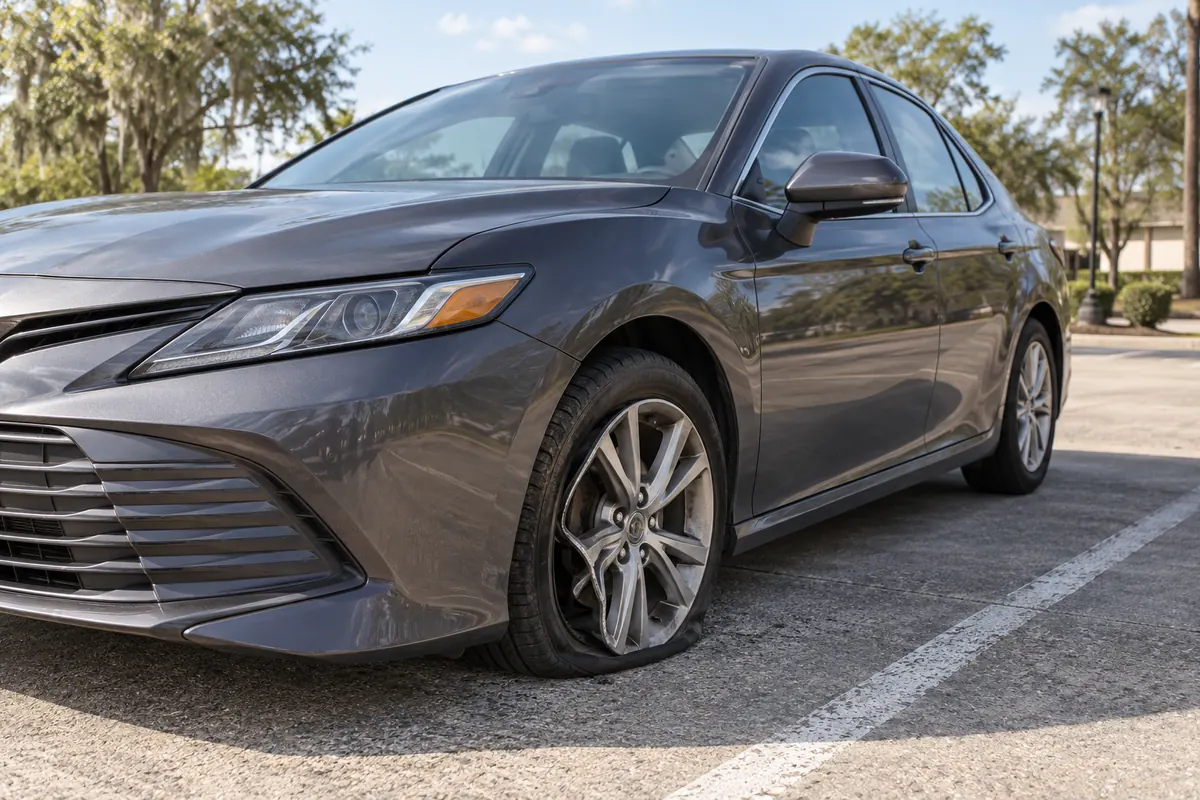
Report the impact before choosing a tire service
This page explains the information that supports a pickup arrangement. It does not tell you how to inspect suspension underneath a car, straighten a wheel or decide that driving is safe. If there is immediate danger or an injury, emergency assistance comes first. For ordinary service coordination, keep the request focused on the current position, visible condition and a reachable contact.
Separate what you saw from what you suspect
Useful observations include a visibly distorted rim, a tire that has lost air, a wheel sitting at an unusual angle, or contact between the wheel and bodywork. Mention a grinding sound, vibration or steering change that occurred before you stopped. Avoid turning those observations into a claim that a particular axle, bearing or steering component has failed when it has not been inspected.
You can say that a detail is unknown. Dispatch does not need you to recreate the impact or test the steering to fill every field on a form. If the affected side cannot be approached safely, explain that limitation. A careful report of what is already known supports a better arrangement than extra photographs taken from a dangerous position or a movement test that changes the vehicle’s condition.
Identify the wheel and the number of tires affected
Say front or rear and driver or passenger side when safely known. If two wheels struck the same pothole, mention both, even if only one tire looks flat. Report whether another tire appears damaged or has lost pressure. Multiple affected wheels can change the information needed for loading and transport. Do not request a single tire change while leaving a second damaged wheel out of the description.
Include whether a spare is available, but distinguish that from saying it is suitable. A temporary spare has its own restrictions, and a replacement wheel does not settle an unresolved steering or suspension concern. If the vehicle was driven after the impact, tell dispatch what happened during that time. The receiver can use the same factual history when the vehicle arrives for inspection.
Explain whether the car is known to roll or steer
A visibly bent wheel or a tire pressed against another part can affect handling at pickup. Tell dispatch if the car is already known not to roll, if the steering is locked, or if a wheel is out of its normal position. Do not attempt to force the controls, release components or push the car just to obtain an answer. The operator assesses the actual condition and selects suitable handling.
Also provide the vehicle year, make and model and any relevant modifications. Low bodywork, lowered suspension, aftermarket wheels, a roof load or cargo can affect the pickup information needed. If you do not know the drivetrain or modification details, state that clearly. The goal is to identify constraints before equipment is confirmed, rather than prescribing a loading method from an online example.
Access can be more complicated than the street address
Give the pickup entrance and current parking orientation. A car facing a wall, inside a garage, behind a gate or on a narrow street needs more description than an open-lot pickup. Include the garage level and posted clearance if safely visible. If another vehicle or barrier blocks the route, identify who can authorize or arrange access. Do not promise that an obstruction will disappear before confirming it.
A location pin should be paired with written directions to the actual vehicle. On a divided roadway, include direction of travel and the side where the vehicle stopped. At an apartment or commercial property, the main address may identify the office rather than the usable vehicle entrance. Tell dispatch where the operator can reach a responsible contact without guessing which driveway to use.
Choose a repair destination that understands the impact
When speaking with a repair or tire shop, explain the impact and the visible wheel condition. Ask whether it can receive a vehicle that may not roll normally and whether it can assess the reported concern. A shop that sells tires may still need to clarify the broader inspection or unloading arrangement. Do not assume acceptance simply because its address appears in a map search.
Share the confirmed receiving address, contact and timing with dispatch. Ask about after-hours delivery and key handling if the shop will be closed. If you prefer a home destination, describe access and placement needs there too. The delivery plan should account for the damaged wheel rather than assuming the car can be driven away from the unloading point after arrival.
Document useful facts without delaying the request
Keep the time and location of the impact, your vehicle details and any existing safe photographs with your service record. These may help you explain the sequence to the receiver or an insurer. This guide does not determine coverage, liability or reimbursement. Ask the relevant organization directly about its documentation requirements rather than treating a towing request as an insurance claim.
When approving service, ask what the quoted scope includes and how new access or damage information would be handled. Call or text 504-908-0072, or send B’s Towing a service request with the vehicle, location, wheel condition and callback number. Mention passengers separately. Wait for confirmation of availability, equipment and the arrangement before assuming a truck has been assigned.
Questions about this situation
Further guidance
Vehicle instructions and an appropriate professional assessment govern the actual service. Source guidance reviewed October 2026.